In the shadow of Snæfellsjökull glacier, an Icelandic visitor center embraces the land by becoming one with it.
Rising subtly from the rugged lava fields of Iceland’s Snæfellsnes peninsula, the Snæfellsjökull National Park Visitor Center in Hellissandur is more than just a building – it is a multisensory experience, a meeting point of nature, culture, and architecture. Designed by the winning team of an open competition in 2006, the project broke ground in 2020 and was completed in 2022, marking a long-anticipated addition to the landscape. The structure was conceived and realized entirely under the rigorous BREEAM certification framework, emphasizing sustainability, low-impact construction, and the thoughtful use of environmentally responsible materials.
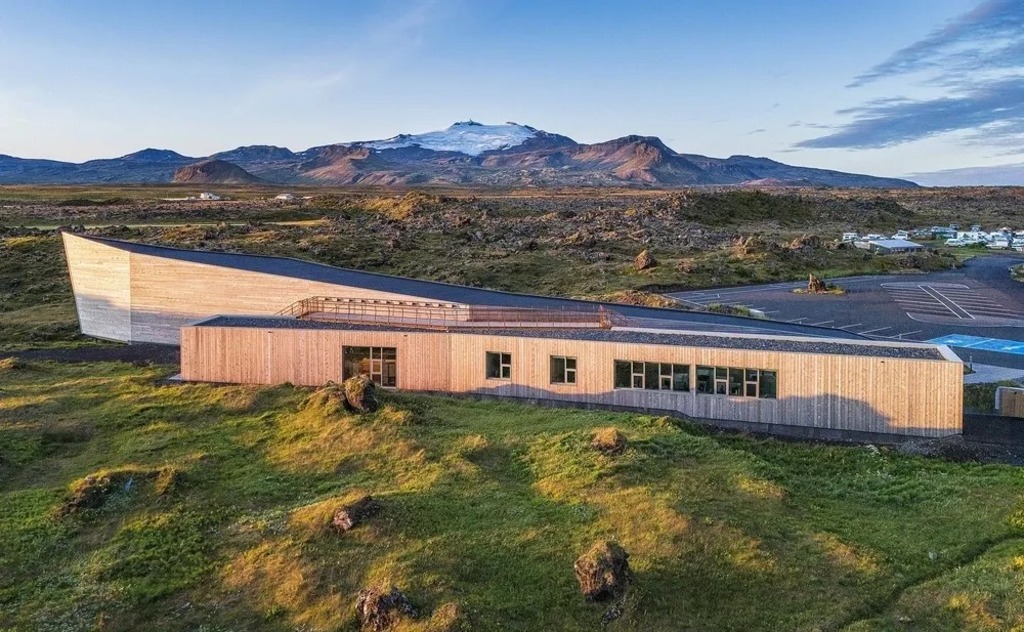
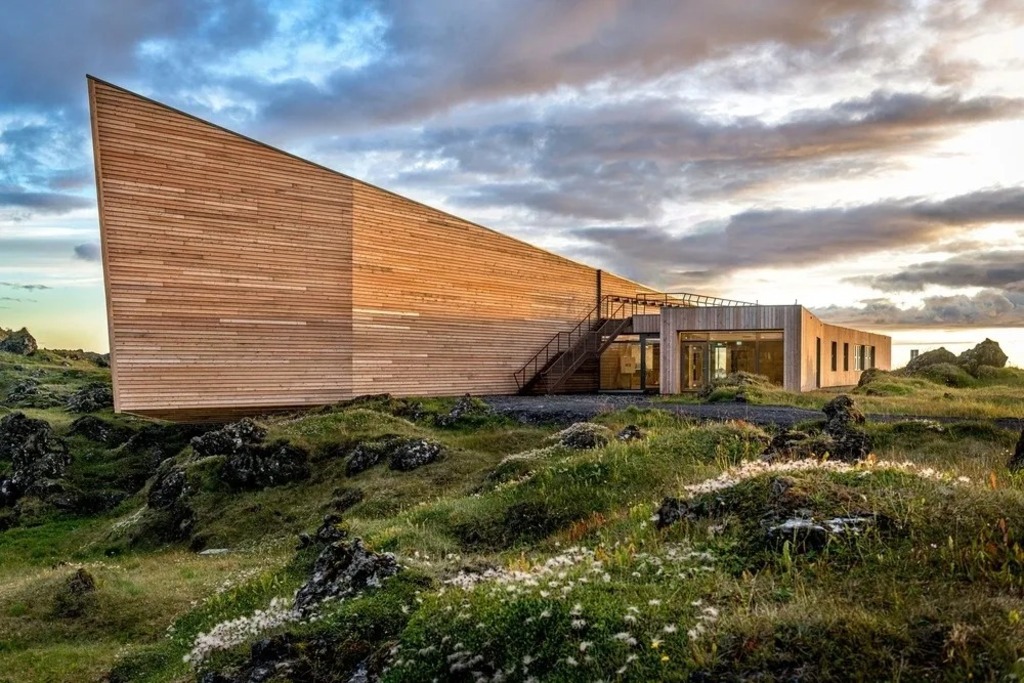
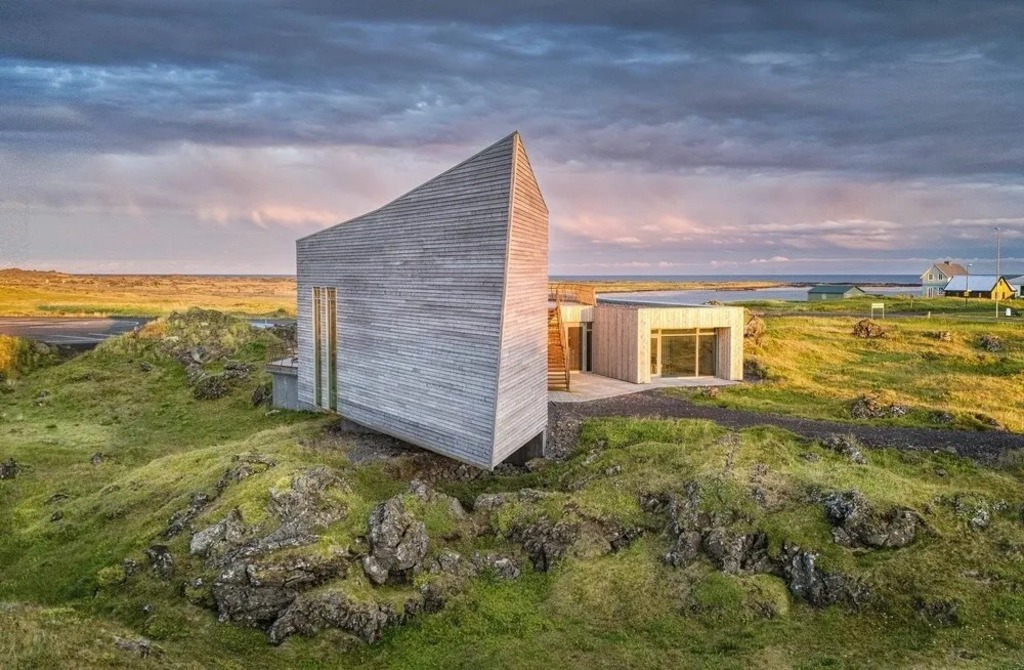
Set against the dramatic backdrop of the Snæfellsjökull glacier, the center is conceived not as an object that imposes itself on the land but as one that emerges from it. From afar, its silhouette gently folds into the lava field, almost imperceptible from the main road. A winding trail from the parking area leads visitors through a sea of volcanic rock, gradually revealing the building – layer by layer – encouraging a sense of discovery. Upon arrival, it opens up as a cultural and ecological threshold: part shelter, part path, part observatory. Its function extends beyond a conventional visitor center to become a space of learning, exploration, and reflection.
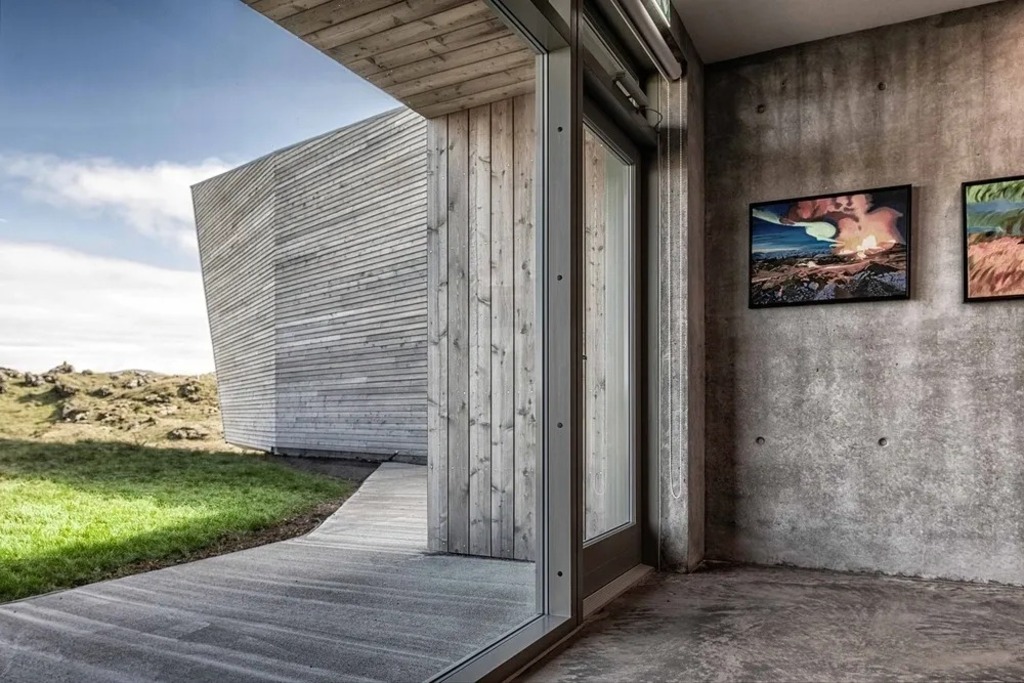
The main form, named Jökulhöfði or “Glacial Cape,” draws inspiration from Iceland’s landscapes and wildlife. Much like a whale – whose eyes see the world from two sides – this building offers multiple perspectives depending on one’s vantage point. Whether viewed from within or approached from a distance, it reshapes how visitors perceive the surrounding terrain. Designed to blend with its environment rather than dominate it, the Glacial Cape invites a different pace of perception – one shaped by light, movement, and subtle material shifts.
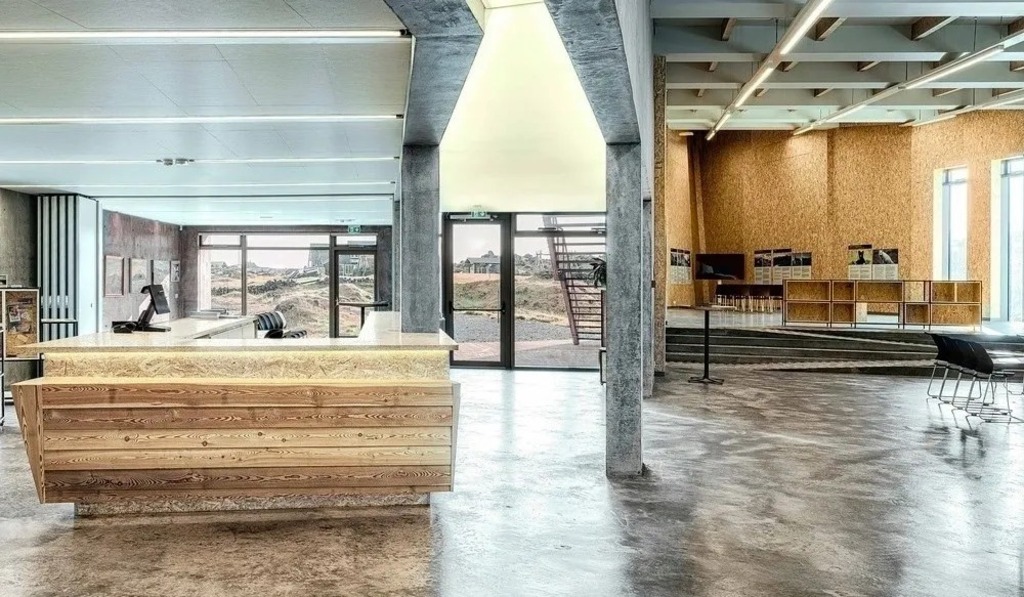
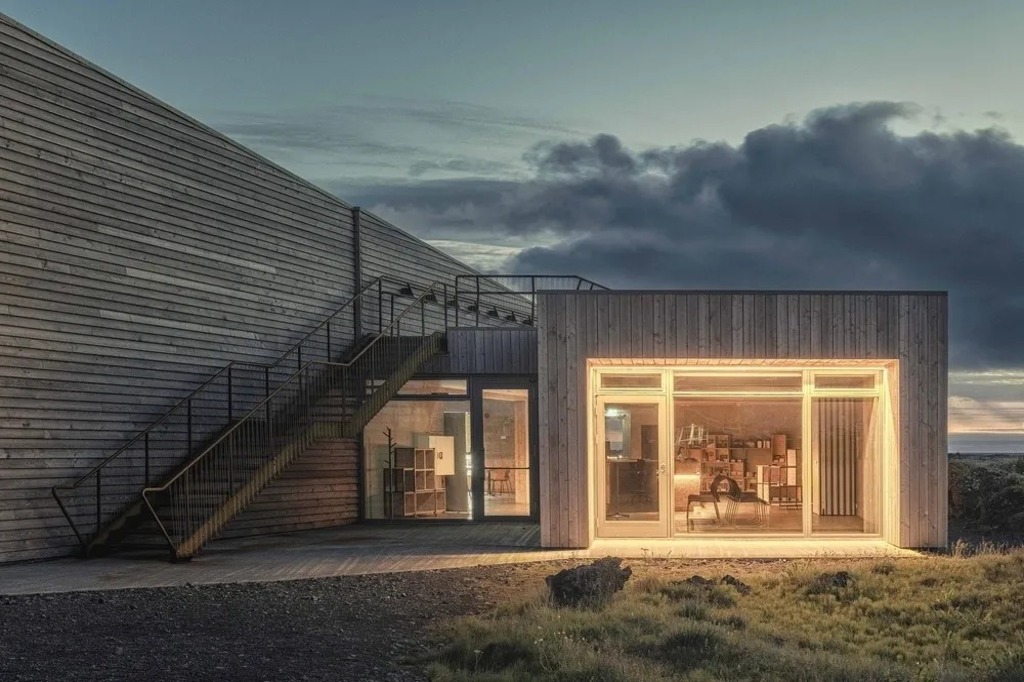
The structure was designed with minimal site disturbance in mind. In one of its most ambitious gestures, part of the building hovers above the edge of the lava field, a move that required innovative structural solutions suitable for the region’s seismic activity. This cantilevered form demonstrates how architectural expression and engineering precision can coexist, especially in sensitive, geologically complex settings. The design is composed of two distinct volumes – Glacial Cape and Fishbone – each serving different functions. While one houses workspaces for National Park staff, the other accommodates public-facing areas including an exhibition space, café, and lecture facilities.
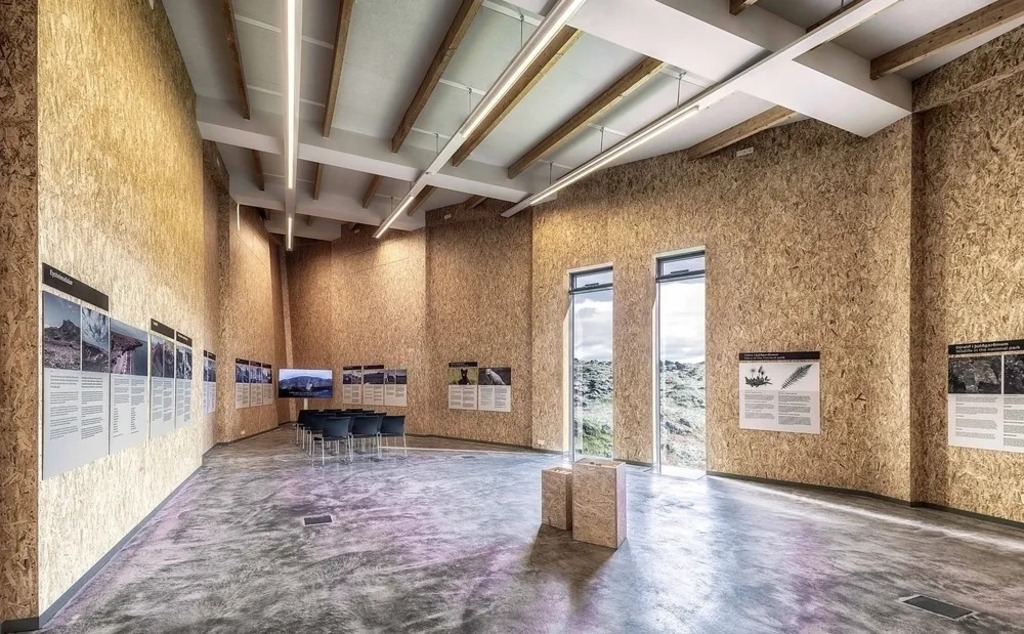
Material selection played a crucial role in the building’s integration with its environment. The exterior is clad in timber, with horizontal boards wrapping the Glacial Cape and vertical slats defining the Fishbone. These subtle variations create a quiet rhythm that complements the building’s natural surroundings. A pathway bisects the structure, allowing visitors to walk directly through from one side to the other, reinforcing the idea of passage – through space, nature, and thought. Stairs on either side lead up to a rooftop deck, where panoramic views of the glacier, lava field, and the fishing village of Hellissandur await.
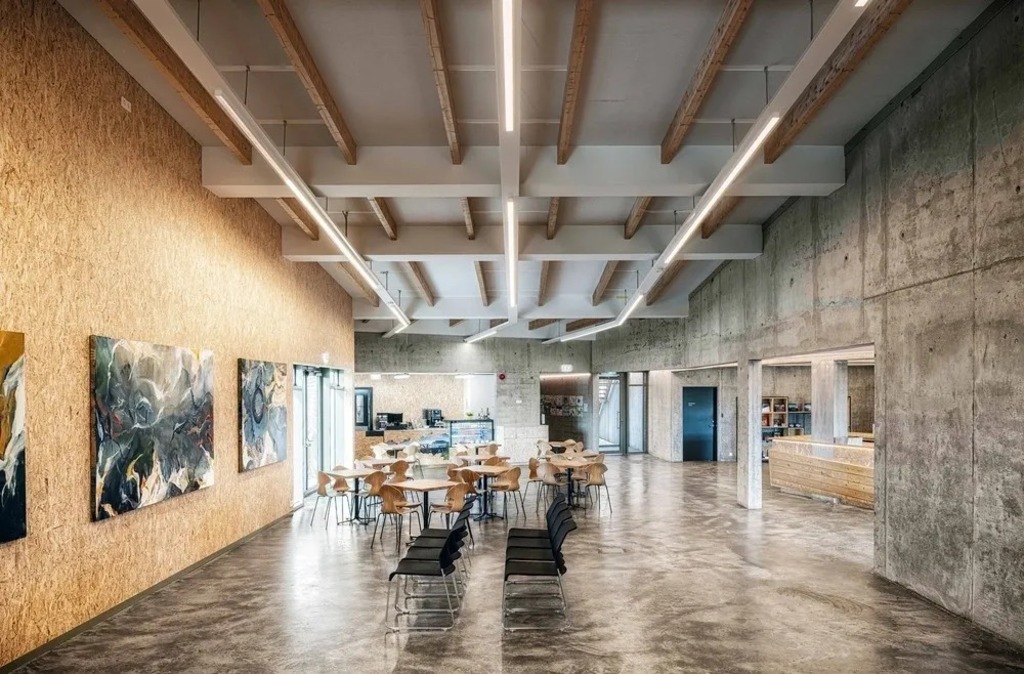
Sustainability was embedded into every layer of the project. All materials were selected for their low-maintenance, durable qualities, allowing the structure to weather naturally over time. The building process followed strict environmental guidelines, with waste carefully monitored, minimized, and documented. All timber used in construction is FSC-certified, ensuring responsible sourcing and traceability. The result is a structure that not only meets high environmental standards but also reflects them through its design language. The principles of BREEAM extend beyond materials and construction into social and ecological integration. The center is connected to the wider park through walking and cycling paths, and its layout invites movement, exploration, and engagement with the landscape. It doesn’t merely exist within the park – it belongs to it, drawing people in and sending them back out with new ways of seeing.
In the end, the Snæfellsjökull National Park Visitor Center stands as a quiet yet powerful statement of how architecture can listen to a place before speaking through it. It reimagines what a visitor center can be – not just a stop along the way, but a destination that deepens the journey.
Photo Courtesy: Karl Vilhjálmsson
Connect Online@www.arkis.is