

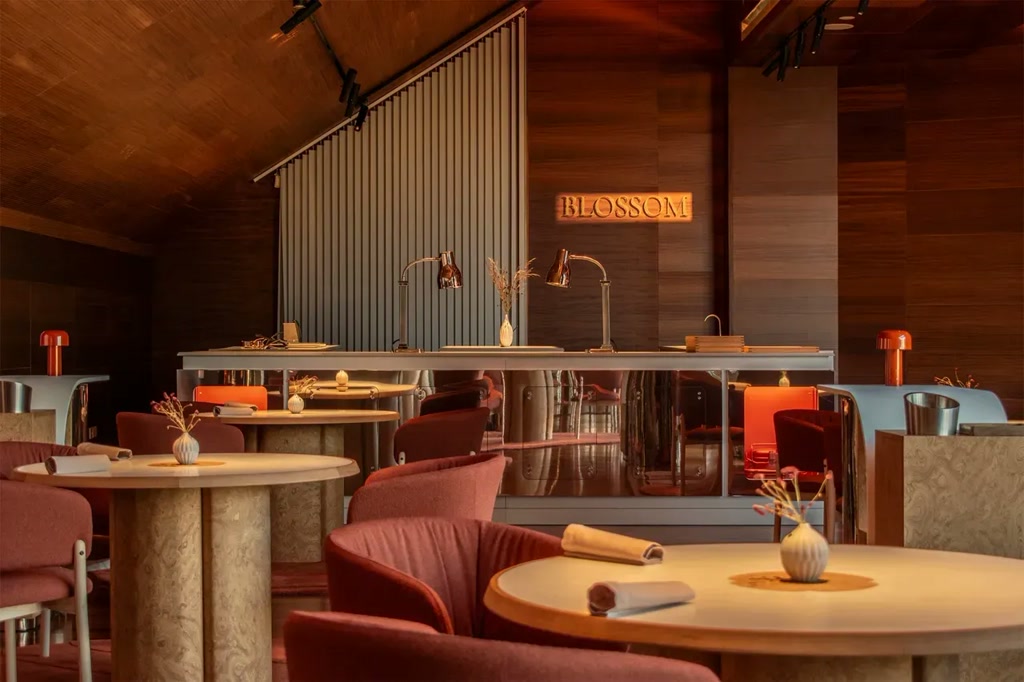
A Michelin-starred restaurant shaped through restrained interventions, custom systems, and scenographic light.
Set on the rooftop of the Museo de Málaga, Blossom occupies an architecturally protected structure of significant cultural value. Recently awarded a Michelin Star (2026), the restaurant has been reconfigured through a precise interior design intervention that prioritises discretion, technical control, and experiential clarity. The project approaches the site not as a blank canvas, but as a sensitive framework within which a contemporary gastronomic concept is carefully inserted.
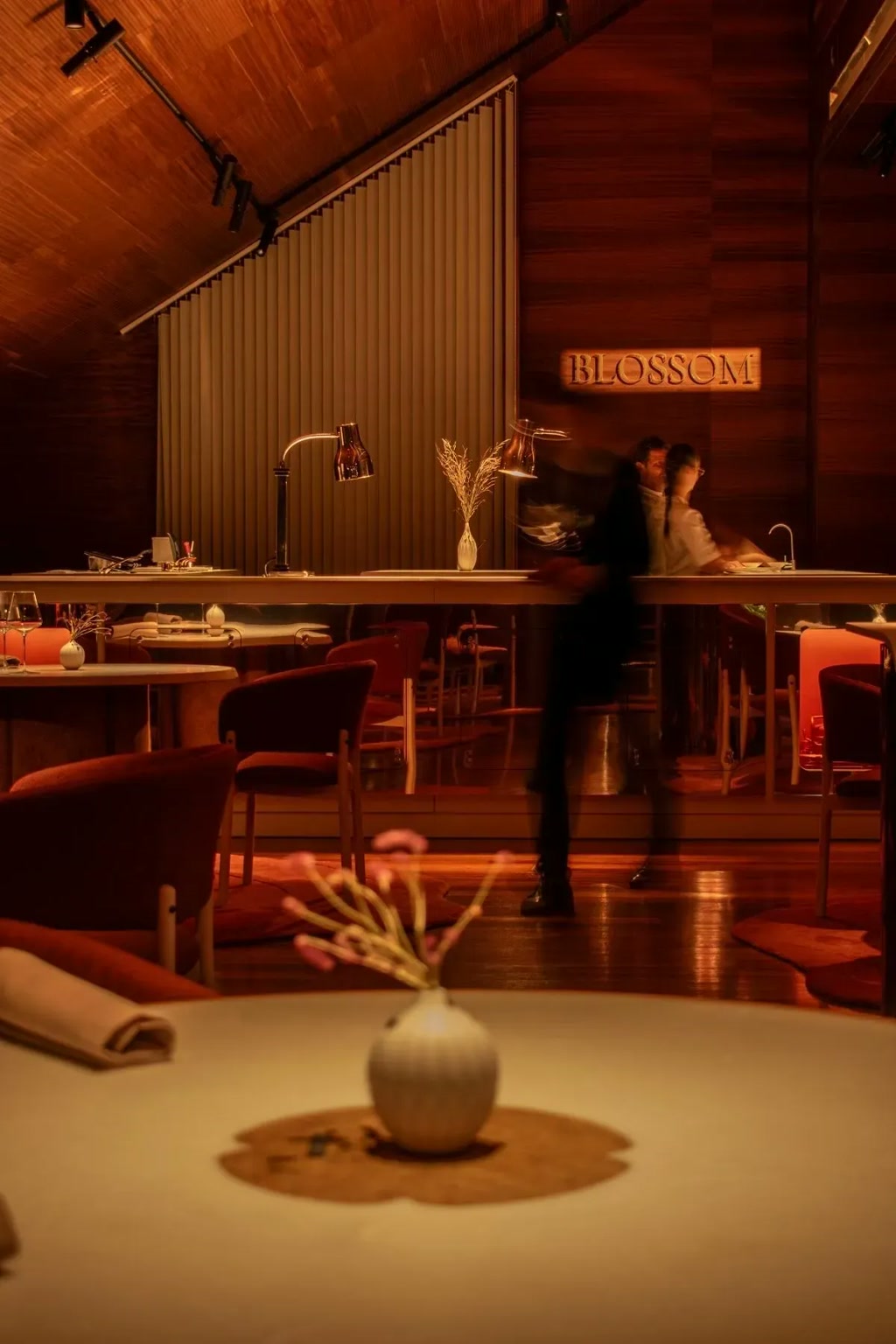
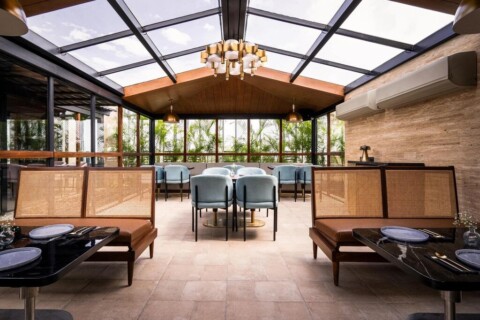
The interior strategy is defined by minimal physical intervention. Natural wood, spy mirror glass, warm surface finishes, and discreetly integrated technology form the material palette, allowing the space to evolve without altering existing walls or ceilings. Custom-designed furniture and a tightly edited decorative selection structure the dining environment, while a home-automation-based lighting system layers warm indirect light with targeted scenographic accents to articulate atmosphere and sequence.
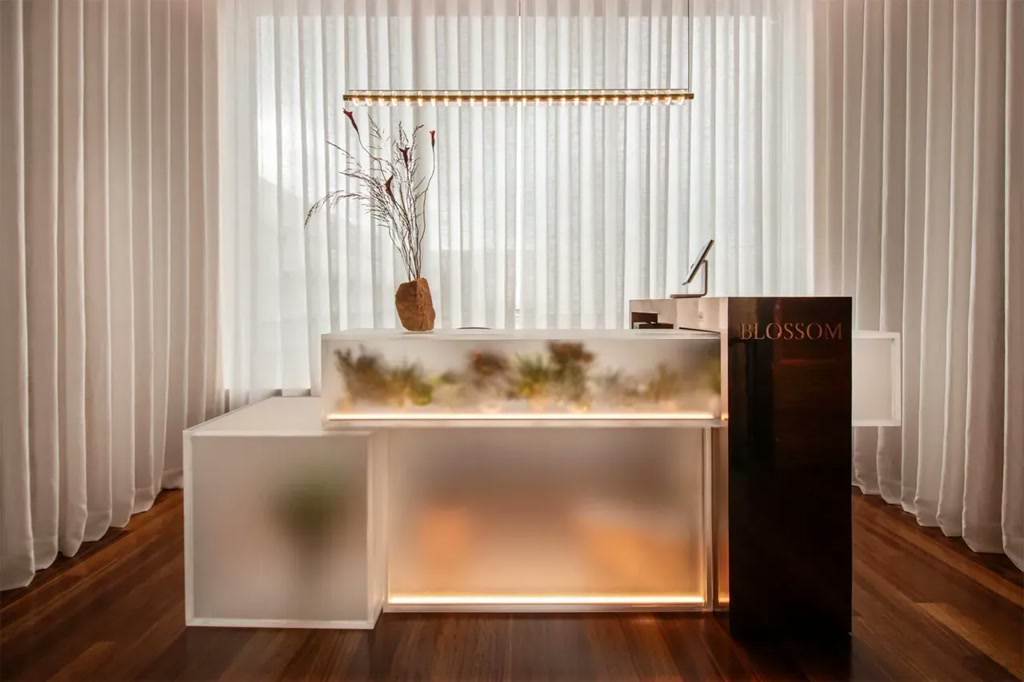
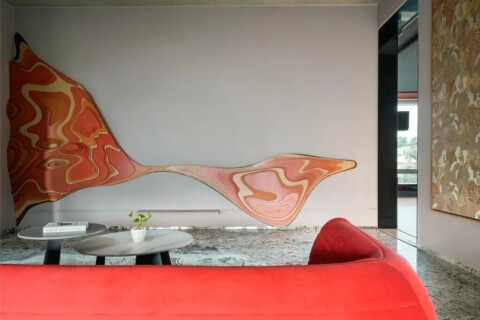
Rather than decoration, the design focuses on orchestration. The project is conceived as a system in which architecture, art, and gastronomy operate in parallel. Integrated artworks function as narrative devices, contributing to the experience without visual excess. The spatial sequence begins at the reception, introduced by a bespoke furniture element, before transitioning through the wine cellar as an initial sensory threshold. The dining room unfolds around a central chef’s bar, positioning the diner as an engaged observer within the culinary process.
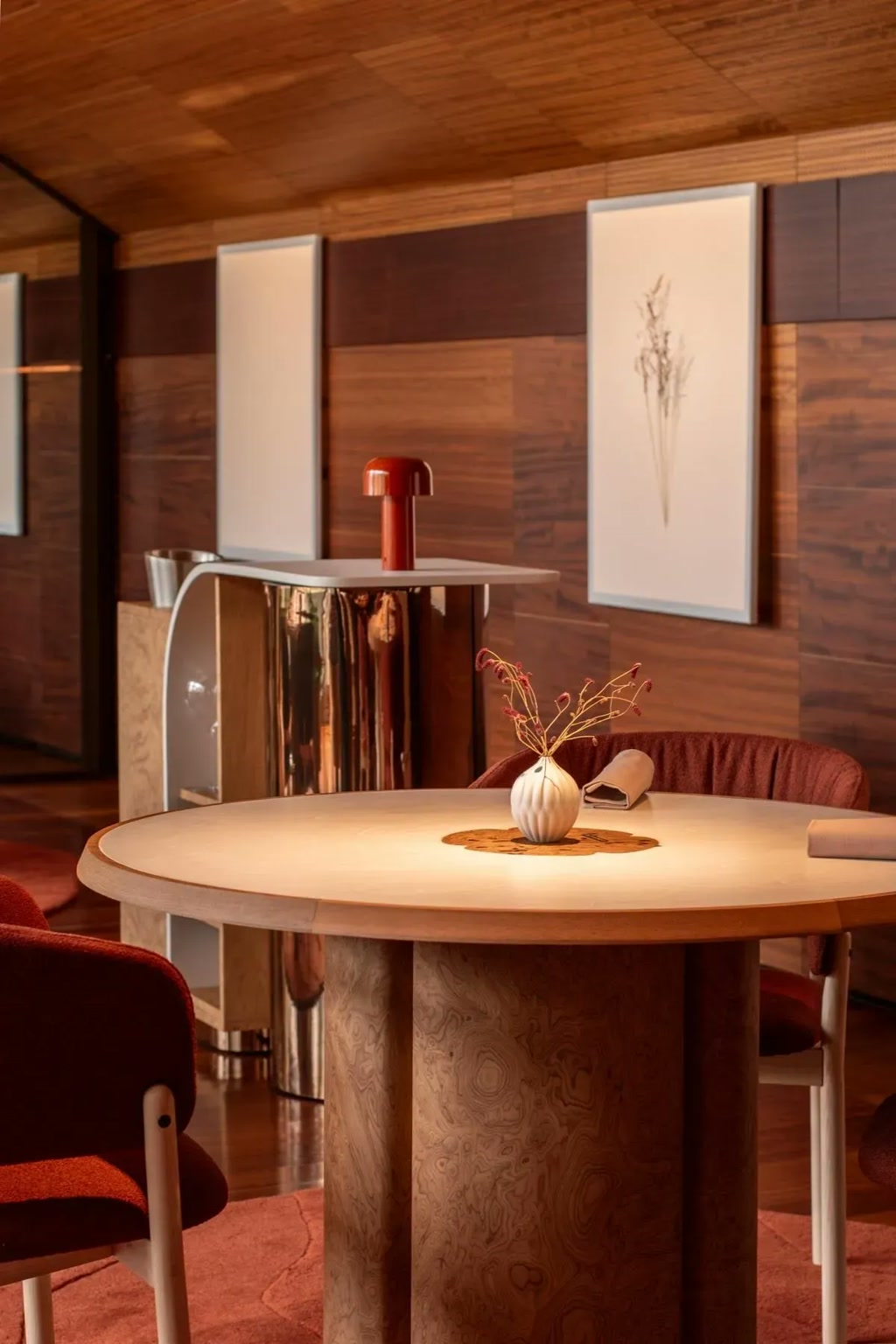
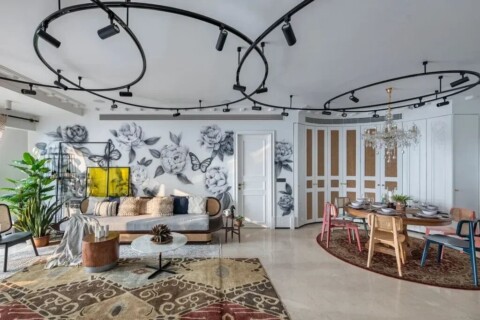
Organic, rounded forms soften the rigidity of the existing architectural shell, while acoustic comfort is achieved without structural modification. Rugs within dining areas and vertical textile elements absorb sound and refine environmental performance, ensuring comfort within an open-plan setting. With the exception of seating and exterior furnishings, all elements have been custom-designed. Tables are conceived as functional instruments rather than decorative objects, eliminating the need for tablecloths and reinforcing the precision of the dining experience.
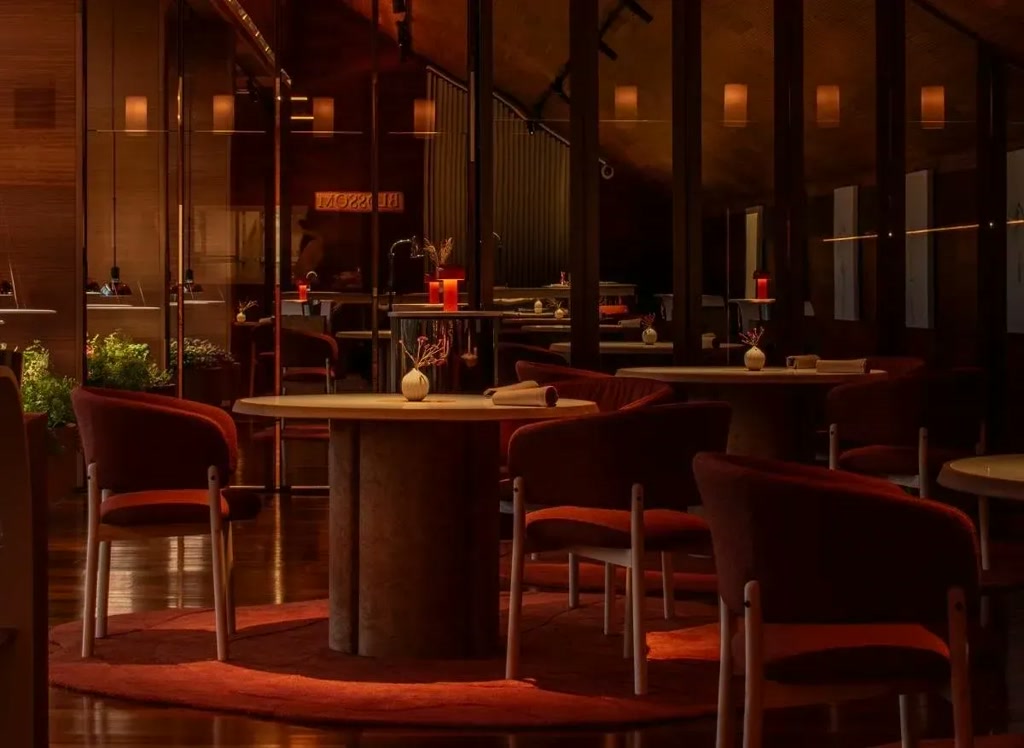
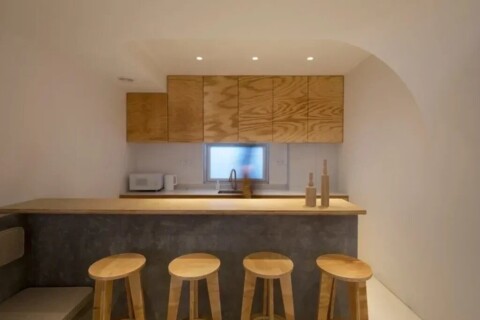
The kitchen remains visually restrained, framed as a controlled focal point rather than a spectacle. Attention is directed toward the chef’s actions rather than the mechanics of the space itself. Technology is deliberately recessed, supporting performance while remaining visually absent. The result is an interior in which no single element competes for prominence; instead, each component contributes to a continuous, uninterrupted experience.
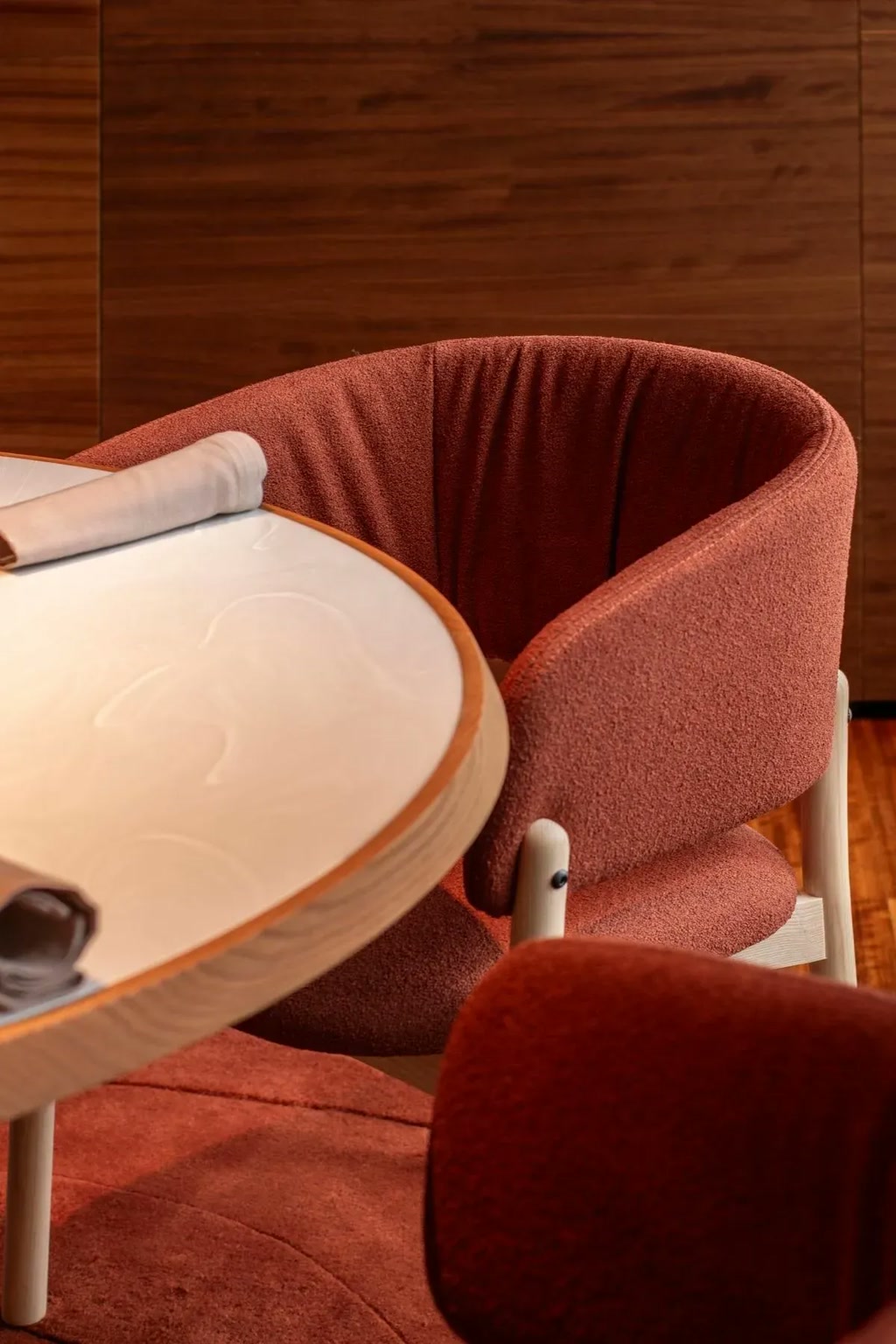
Blossom’s return to Michelin recognition is supported by an interior architecture that aligns with the museum’s historical and cultural context rather than challenging it. The project demonstrates how technically complex design solutions can be executed with restraint, resulting in an environment that feels effortless, immersive, and precisely calibrated to its purpose.
Photo Courtesy: Alba Urbano (@camuriz)
Connect Online @ www.instagram.com/lagointerioriza