Montréal City Hall’s transformation bridges history with a bold, sustainable future.
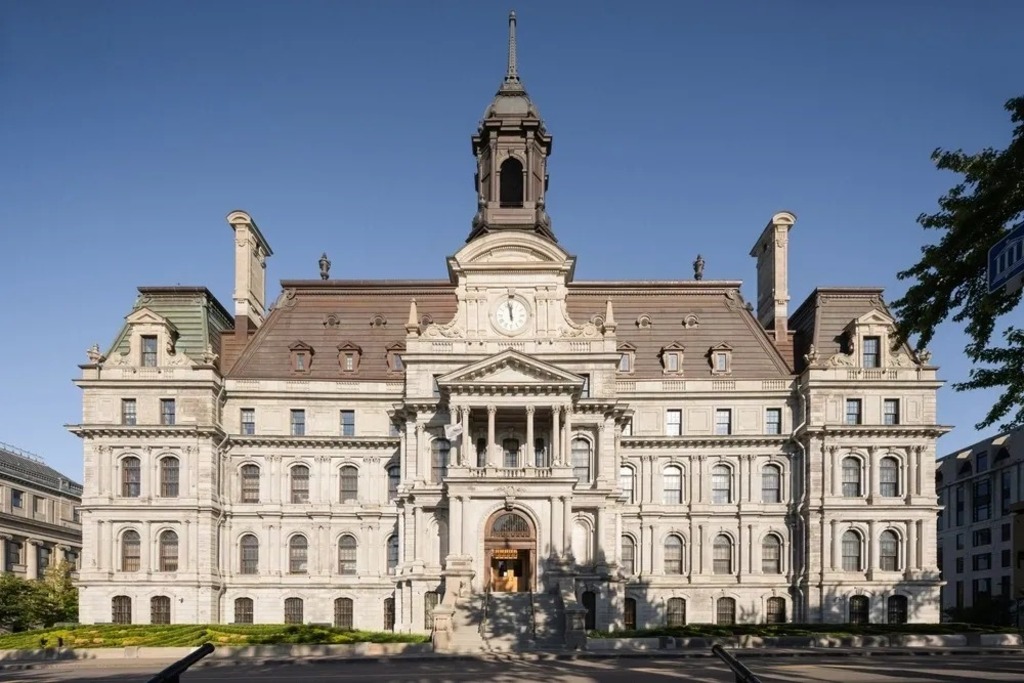
Constructed between 1872 and 1878, Montréal’s City Hall stands as a defining landmark in Canadian municipal history. It was the first building in the country designed exclusively to house a city’s administration, and its monumental Second Empire style reflected both the city’s rising influence in late 19th-century North America and its enduring French heritage.
After a devastating fire in 1922, the building was reconstructed in 1925 – preserving the original stone walls while gaining an additional storey. Nearly a century later, a new chapter began. Launched in 2017, the recent restoration represents one of Québec’s most ambitious heritage conservation projects to date.
Led by Beaupré Michaud et Associés, in collaboration with MU Architecture and a team of expert consultants, the project brings together architectural preservation, functional reorganization, and forward-thinking sustainability. The overarching goal was clear: to respect the City Hall’s heritage while reactivating its role as a living, accessible civic institution.
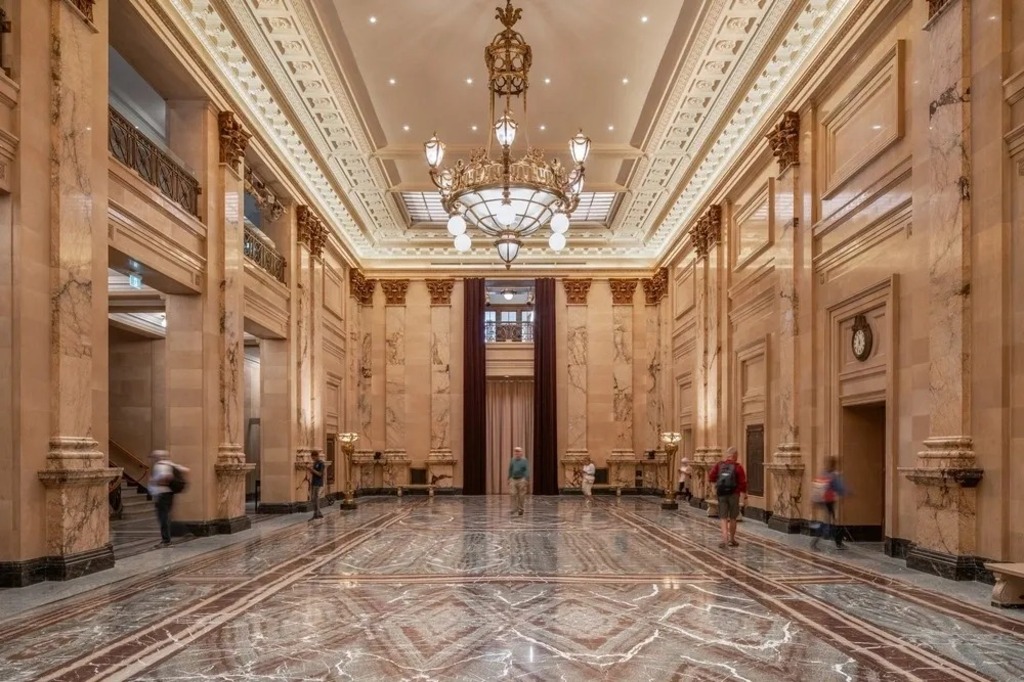
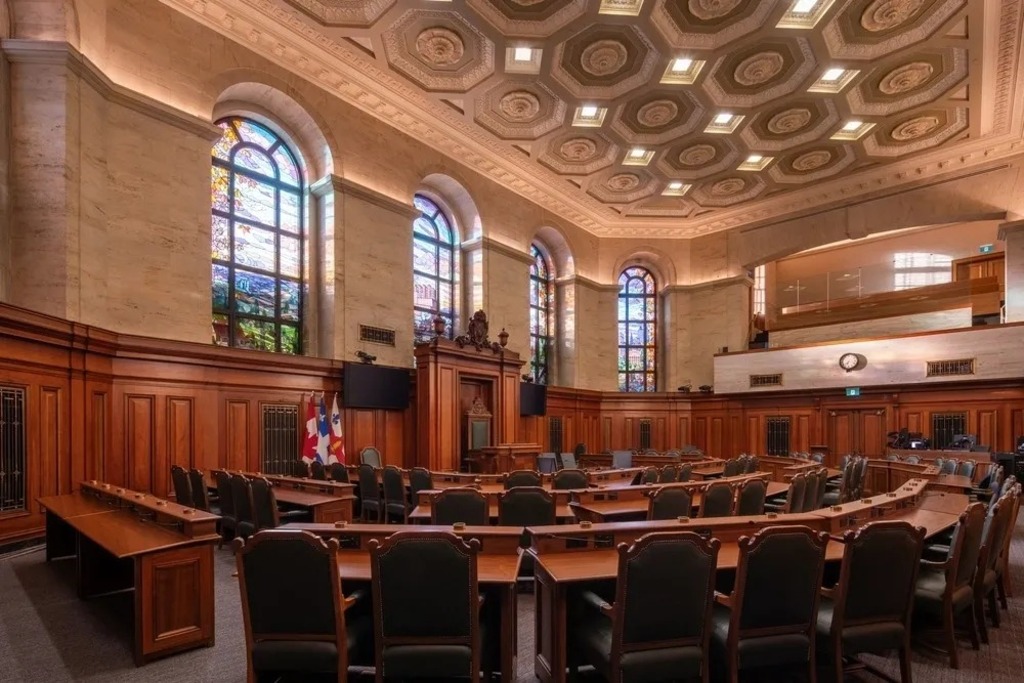
A key design gesture was the reintroduction of natural light to restore spatial clarity and reinvigorate the public’s experience of the building. Walls were opened up, circulation routes redefined, and a new public pathway was created through a sequence of important civic spaces – including the Hall of Honour, the Council Chamber, the Salon de la Francophonie, and the historic Balcon du Discours. This renewed transparency makes the building not only more accessible, but also more symbolic of its democratic function.
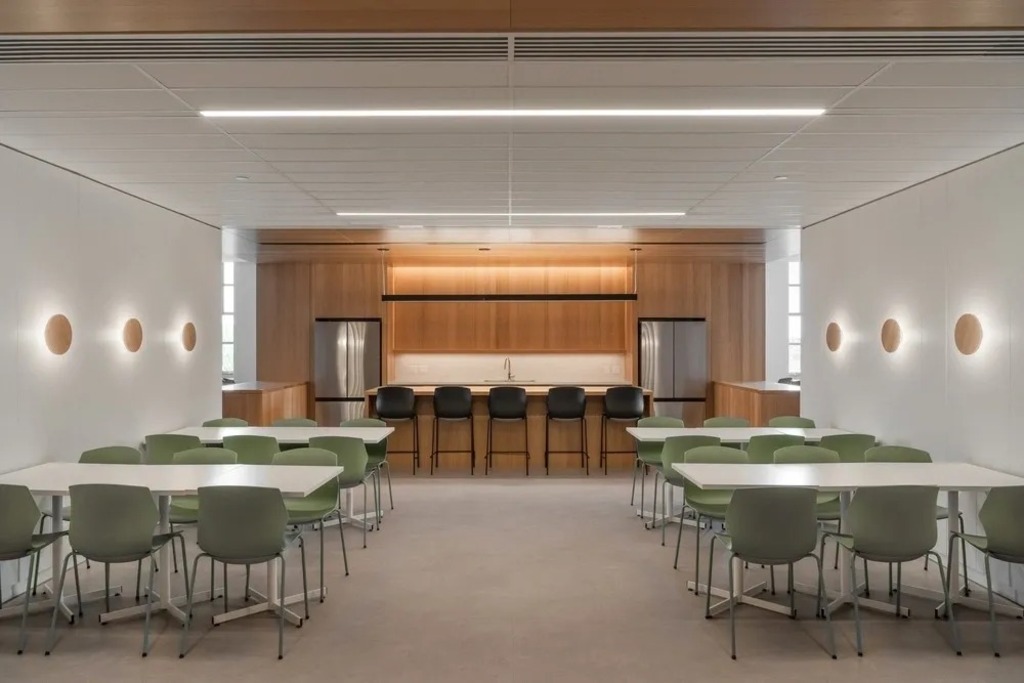
Interior reorganizations were undertaken with a focus on strengthening connections between the public and their elected officials. A redesigned, open reception hall, new service counters, exhibition areas, a press room, family-friendly zones, and a café all reflect a philosophy of openness and inclusion. The layout also meets the highest standards of universal accessibility.
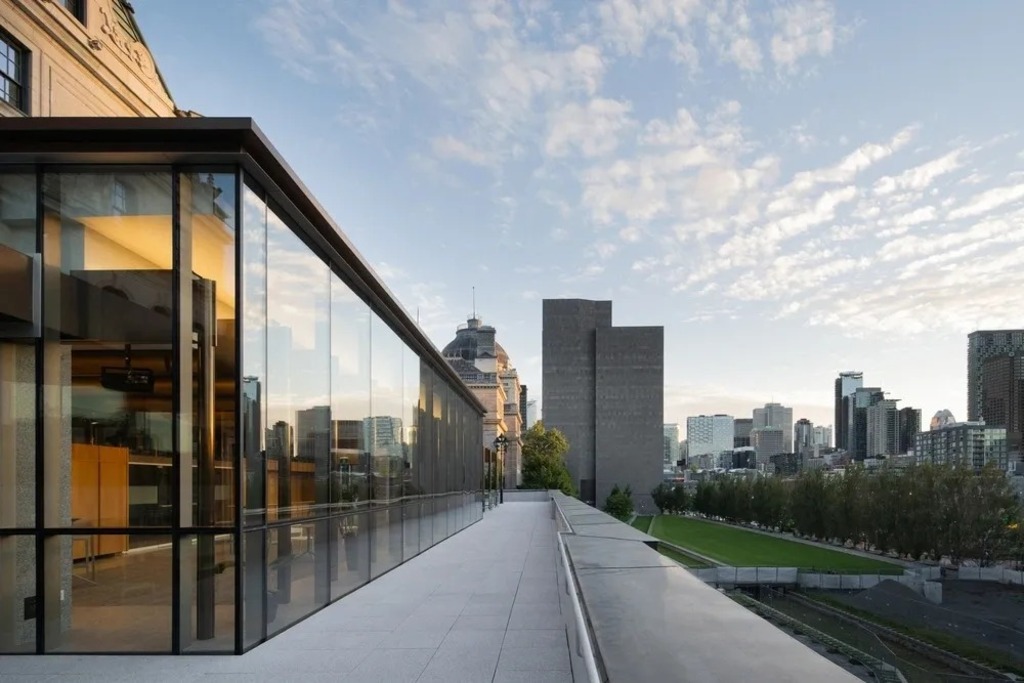
One of the most striking interventions is a contemporary addition replacing a former temporary structure on the terrace. Crafted in brass and granite, the new volume is both refined and respectful of the historic fabric. It offers sweeping views of Mount Royal and downtown Montréal, reinforcing the building’s identity as a bridge between heritage and innovation.
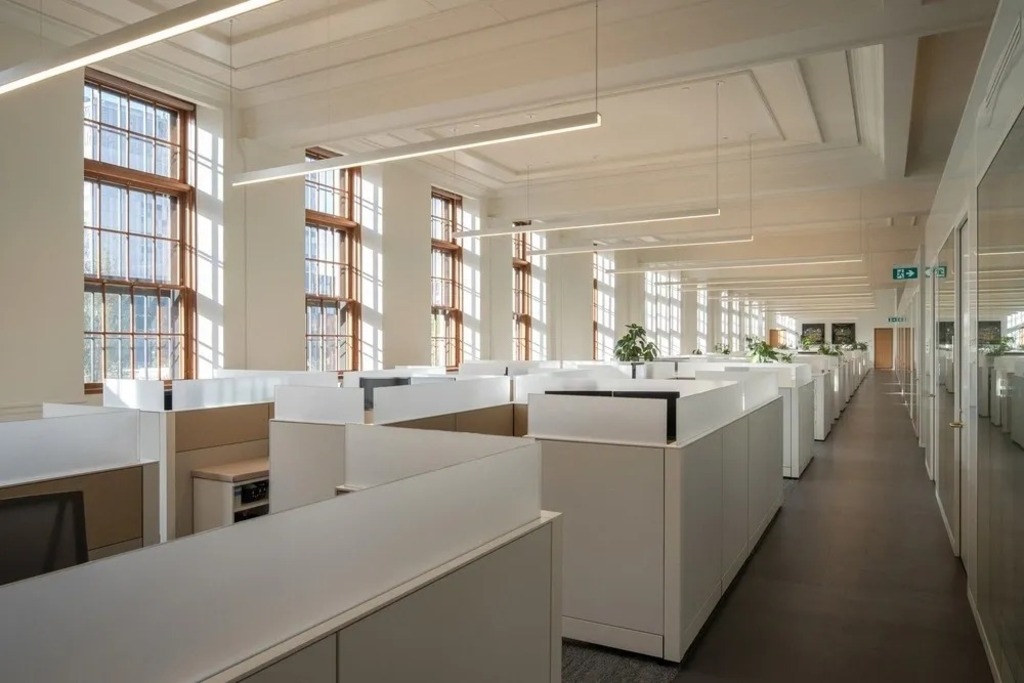
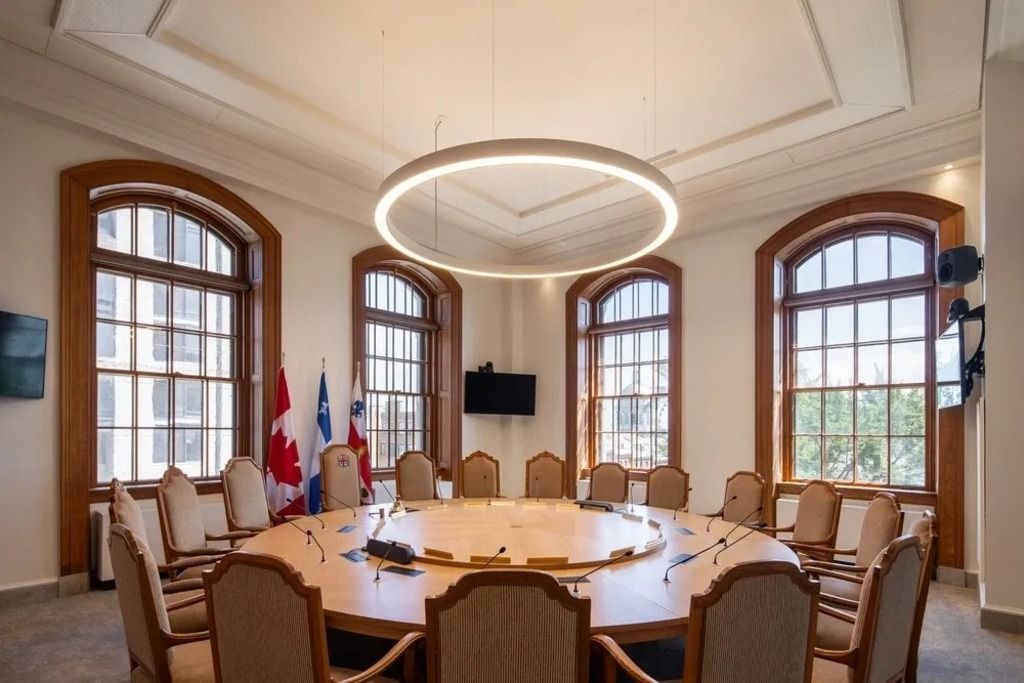
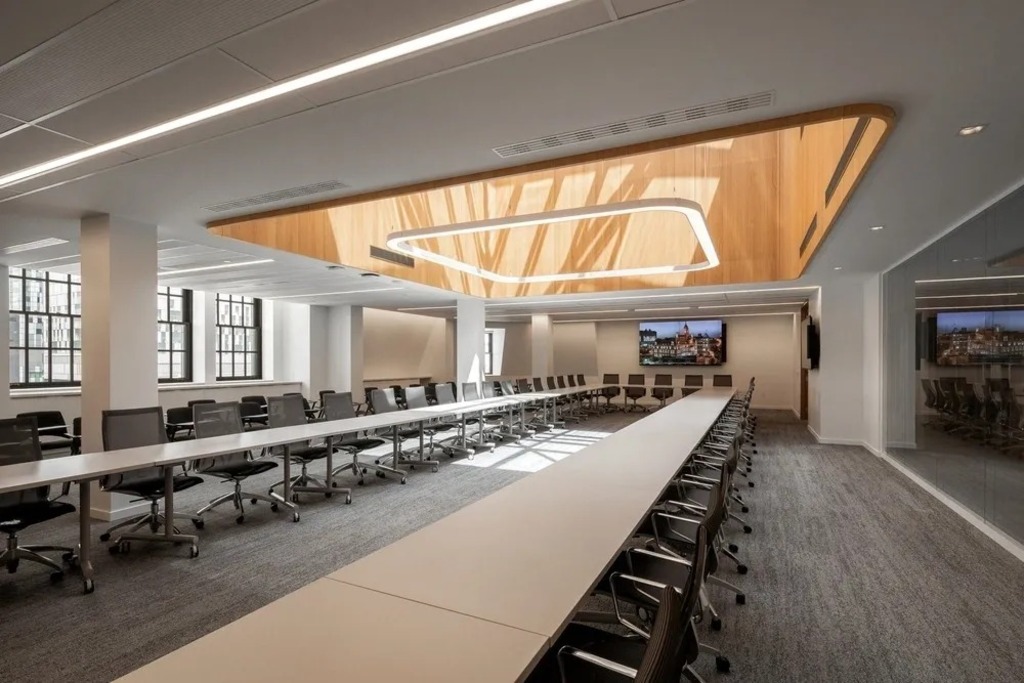
The upper floors, once dark and compartmentalized, have been transformed into bright, flexible work environments. Prioritizing natural light, acoustic comfort, biophilic design, and discreet technological integration, these new spaces support health and collaboration. Lessons from the COVID-19 pandemic informed new workplace configurations, introducing areas for focused work, informal gathering, digital communication, and rest.
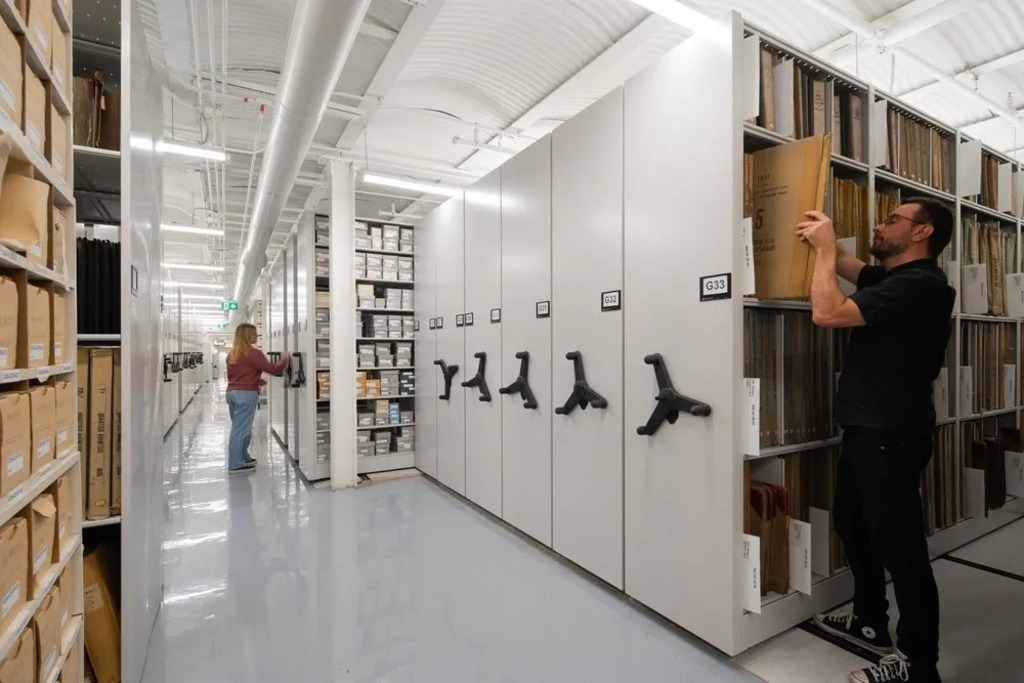
Sustainability lies at the heart of the project. Targeting LEED v4.1 certification, the renovation has achieved a remarkable 79% reduction in energy consumption. This was accomplished through a combination of material conservation, high-efficiency systems, and a nearly carbon-neutral energy strategy. Facilities supporting active mobility – including bike garages, showers, lockers, and EV charging stations – complement the building’s green credentials.
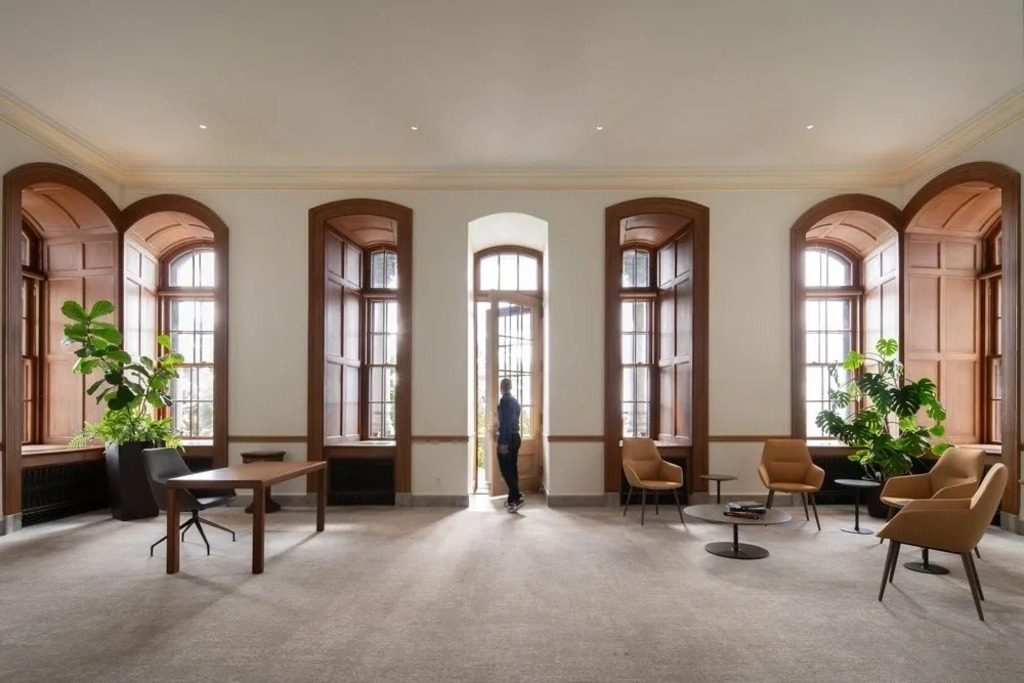
The restoration’s rigour is matched by its attention to craft. Over 12,000 tonnes of original stone were preserved, and 169 historic oak sash windows were restored – maintaining heritage aesthetics while enhancing performance. Traditional craftsmanship in stone masonry, carpentry, tinsmithing, and metalwork was not only showcased but passed on to a new generation of artisans.
In sum, the revitalization of Montréal’s City Hall restores the building’s stature as both a historic monument and a living institution. It is a powerful example of how architecture can bridge memory and modernity – an emblem of urban resilience, civic identity, and sustainable design for the 21st century.
Photo Courtesy: Raphaël Thibodeau
Connect Online@www.bmaarchitectes.com