

The project adopts vernacular architecture, carefully adapted for contemporary summer living.
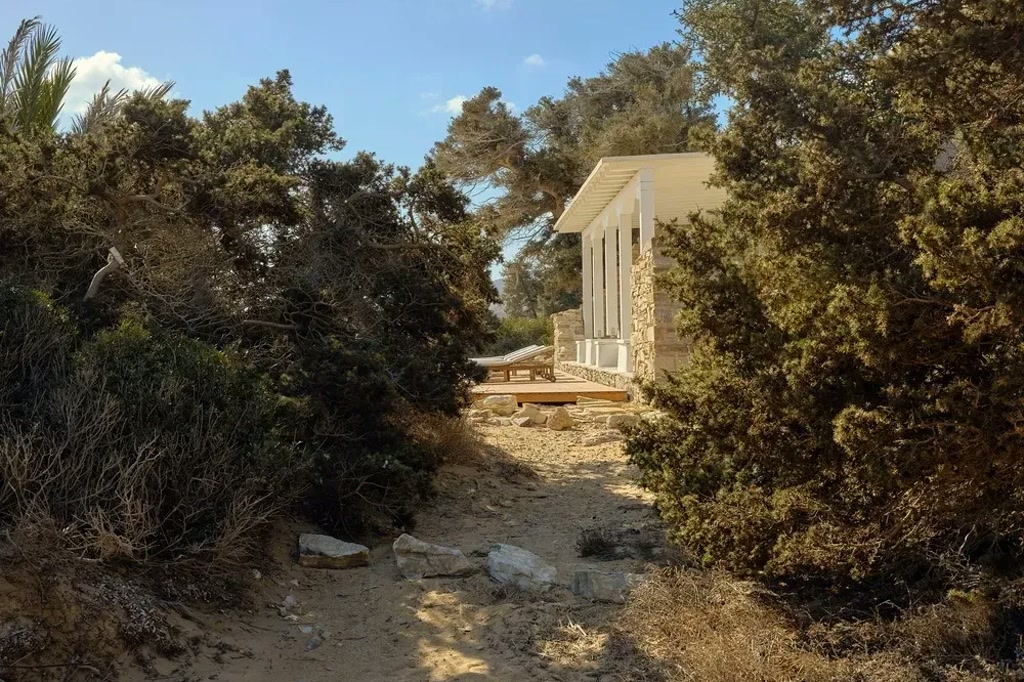
Set along the shoreline of Antiparos in the Cyclades, Patitiri is a historic stone structure built between 1933 and 1936. Its name — derived from the Greek word for winepress — reflects its original use as a communal space for traditional wine-making, where grapes were manually pressed to begin fermentation. Archaeological traces found offshore indicate that viticulture in the area dates back to antiquity, situating the building within a long-standing agricultural and cultural continuum.
Over decades and multiple ownerships, the structure gradually transitioned from its utilitarian origins into a residential retreat. Despite the absence of a formal heritage designation, its recognisable presence and role in the island’s collective memory informed a restoration-led design approach.
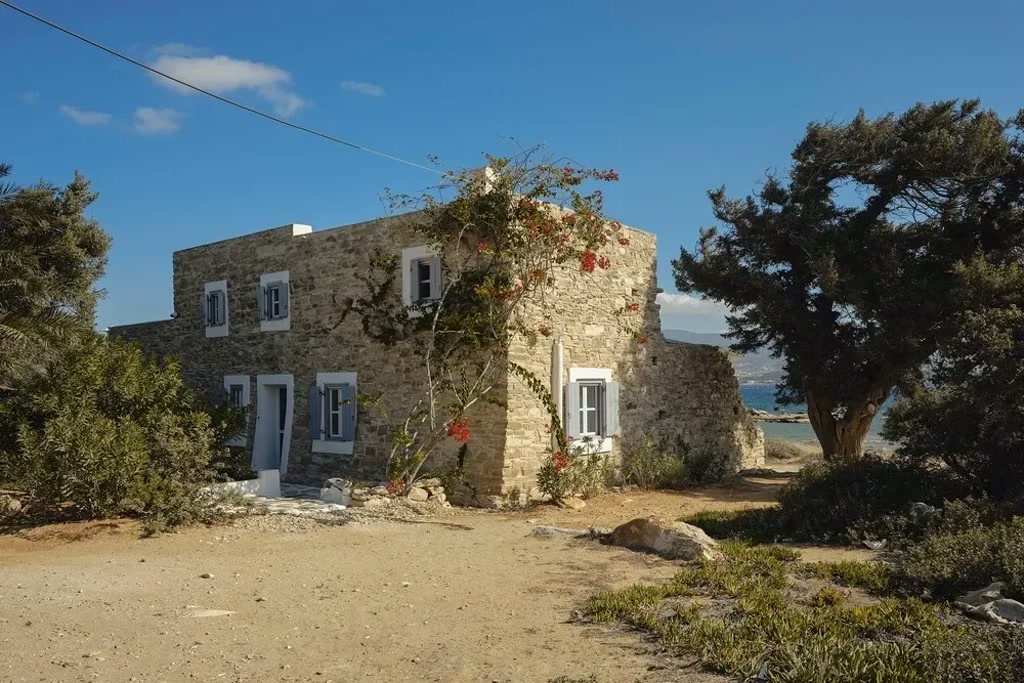
The exterior was treated with restraint and respect. Existing stone walls were carefully restored and regrouted, preserving their original texture and proportions. The overall envelope remains intact, reinforcing the building’s landmark quality along the coastline. Outdoor interventions were intentionally minimal and functional, limited to a reclaimed marble sink integrated into the exterior counter and a custom Dionysos marble table. Timber shutters, once a dark brown, were repainted in a light blue tone to reflect the surrounding seascape and enhance the building’s coastal character.
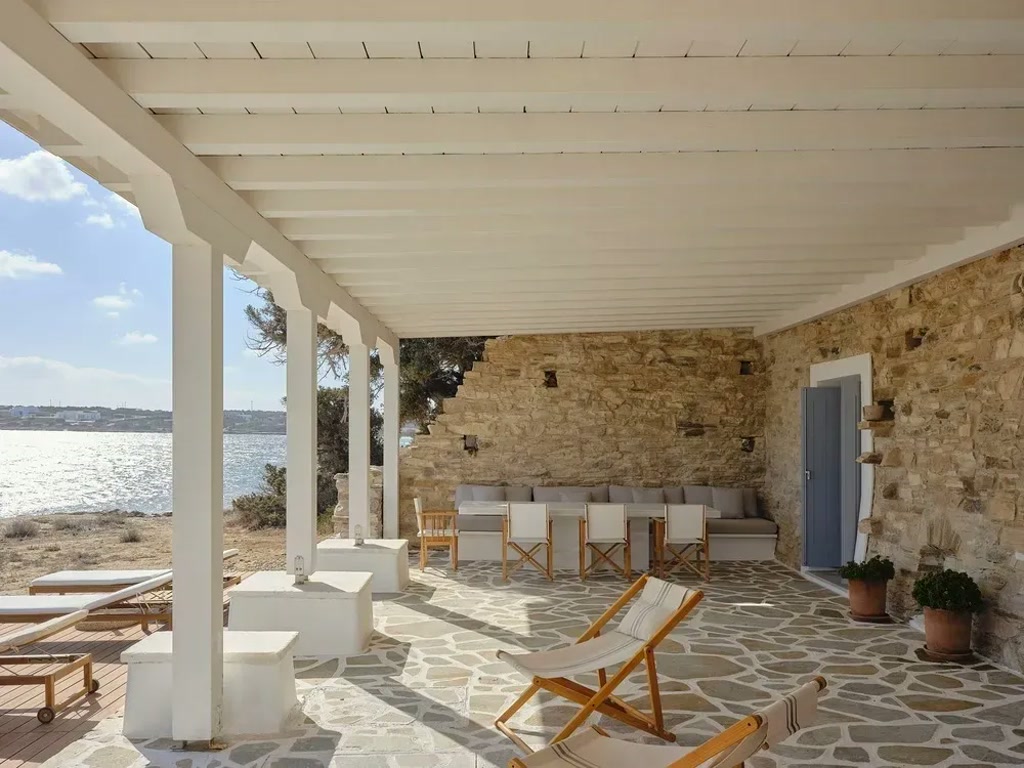
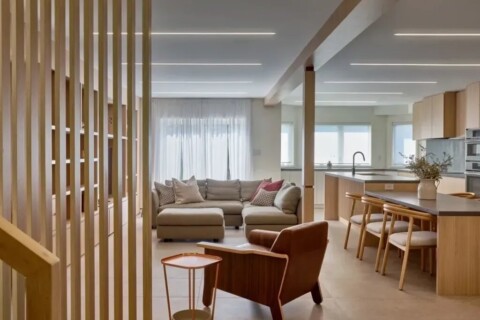
Inside, the design strategy focused on continuity rather than contrast. Existing materials were retained wherever possible and complemented by a limited palette of white-painted solid oak and Naxos marble sourced from a neighbouring island. These additions introduce clarity and lightness while remaining consistent with the regional material language.
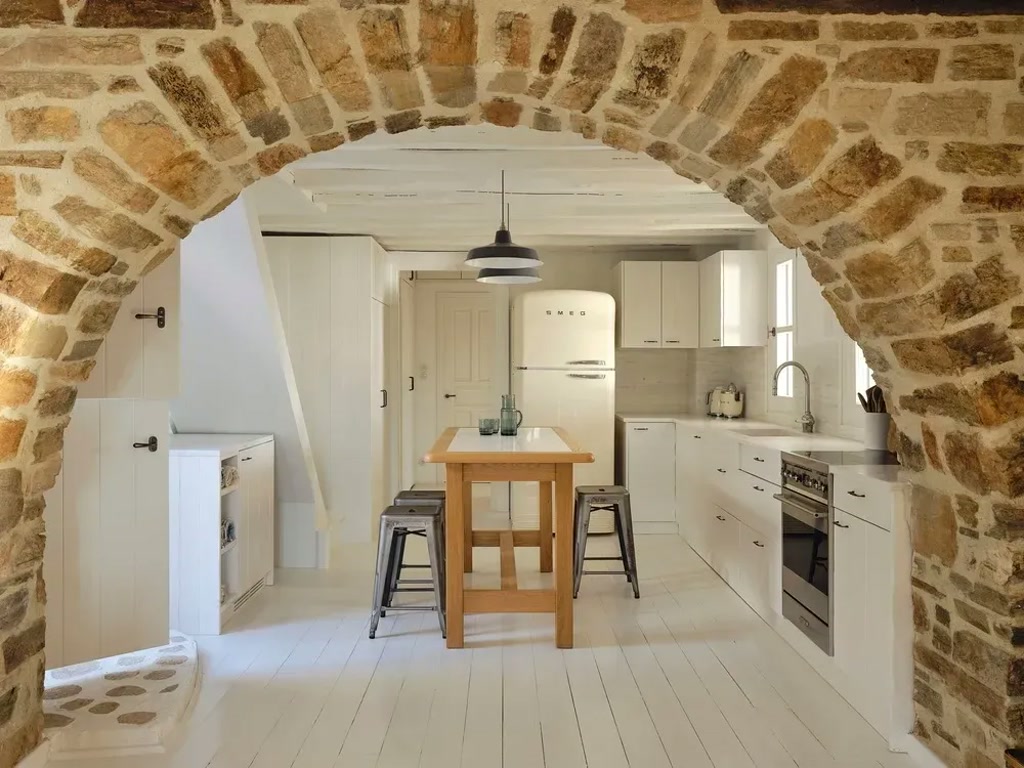
Spatial interventions were precise and targeted. Rather than altering the structure extensively, the interior layout was refined through selective reconfiguration — particularly in the kitchen and bathroom zones — to improve usability and flow. This approach allowed the original character of the building to remain legible while adapting it to contemporary living requirements.
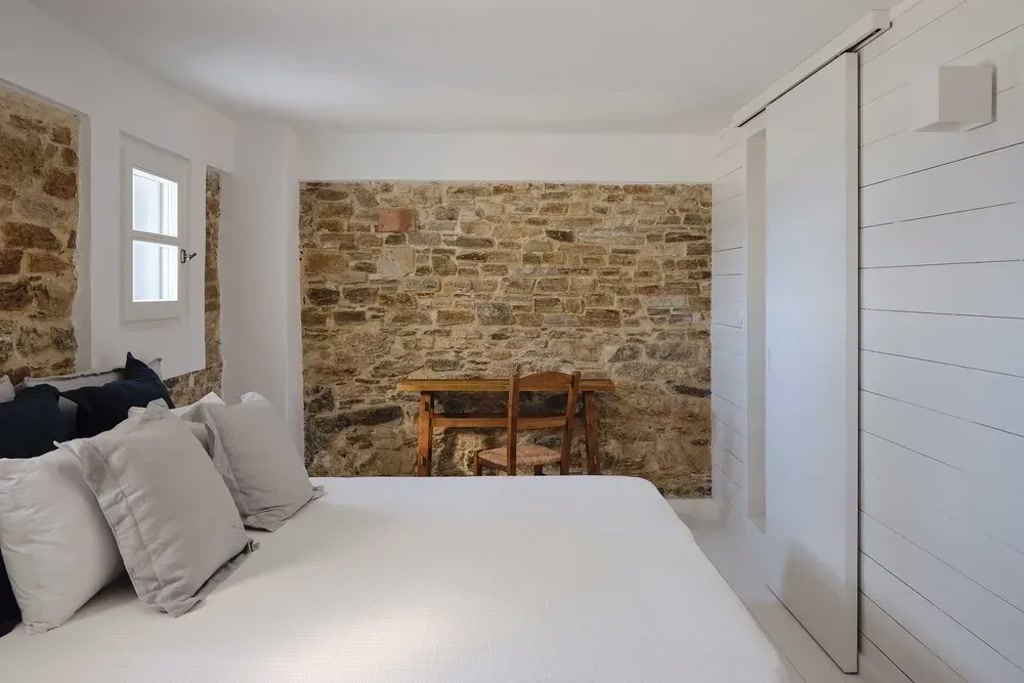
The resulting interiors balance vernacular references with clean-lined detailing. Natural materials, local stone, and restrained finishes create a quiet continuity between old and new. Furnishings and architectural details follow the same principle, supporting a cohesive environment that feels both grounded and current.
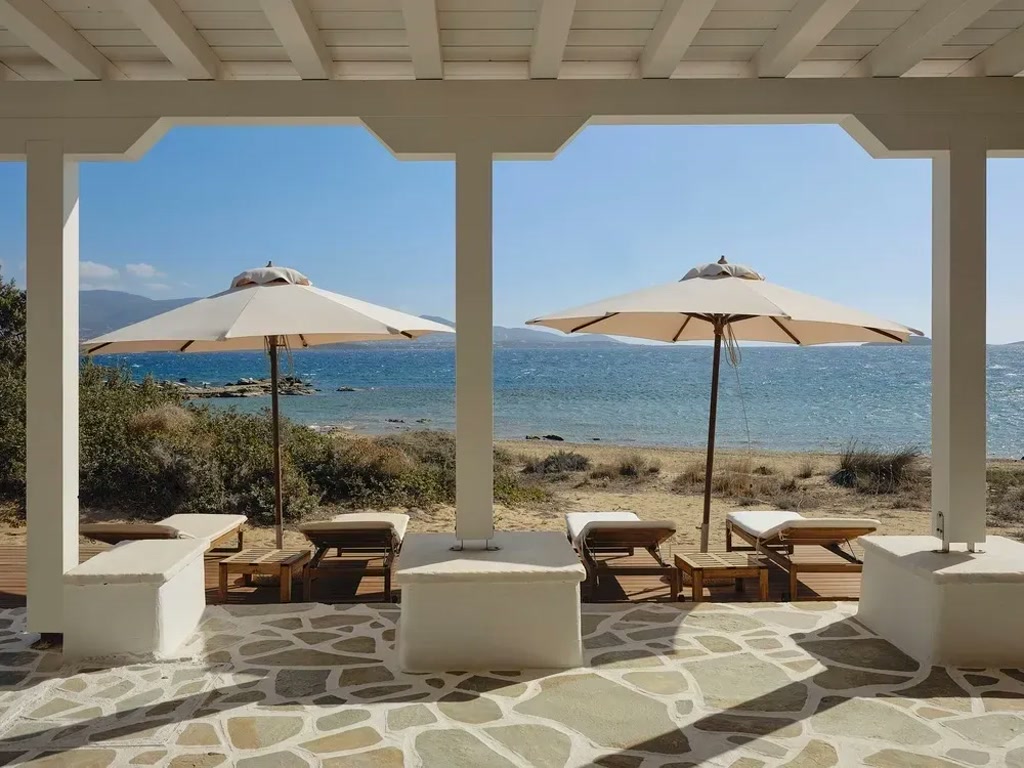
Today, Patitiri functions as a summer residence that reflects its layered history without resorting to nostalgia. Through careful restoration, material discipline, and measured intervention, the project demonstrates how existing structures can be adapted with sensitivity — preserving cultural memory while accommodating modern use.
Photo Courtesy: Giulio Ghirardi Connect Online @ www.arp.com.gr