

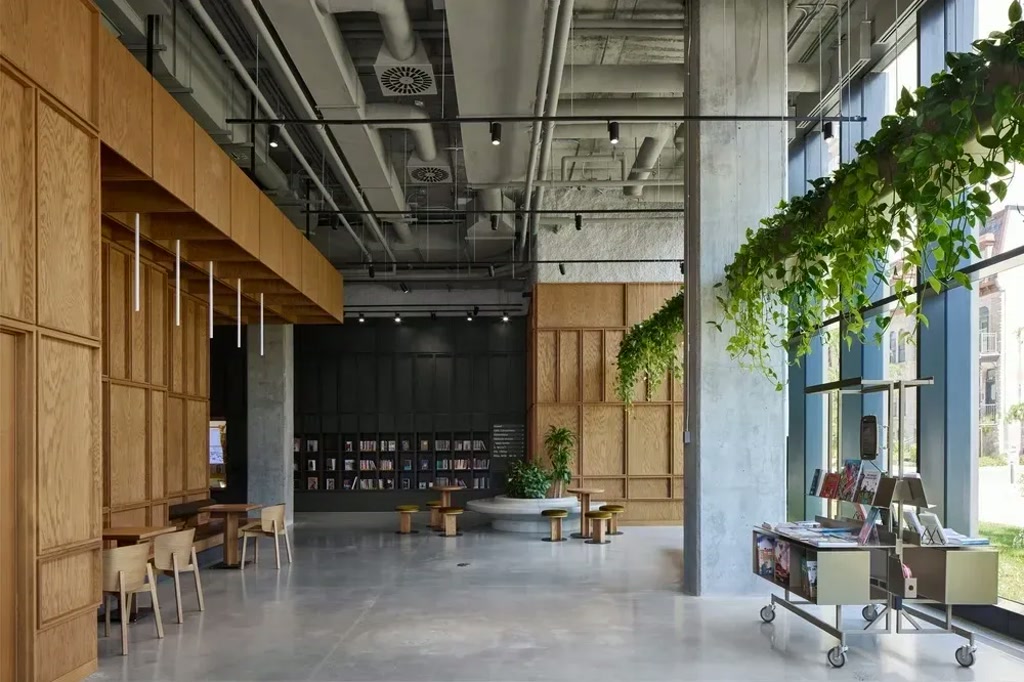
A multidisciplinary cultural centre shaped by collaboration, openness, and urban continuity designed by Pelletier de Fontenay + Architecture49 + Atelier Zébulon Perron architects.
Located in downtown Montreal’s Peter-McGill district, Centre SANAAQ introduces a new civic interior conceived as an extension of the city itself. Developed through close collaboration between Pelletier de Fontenay, Architecture49, and Atelier Zébulon Perron, the project brings architecture, interior design, and scenography into a single, cohesive framework. Rather than operating as a singular architectural object, the Centre is positioned as an adaptable public system — one that privileges participation, accessibility, and cultural production.
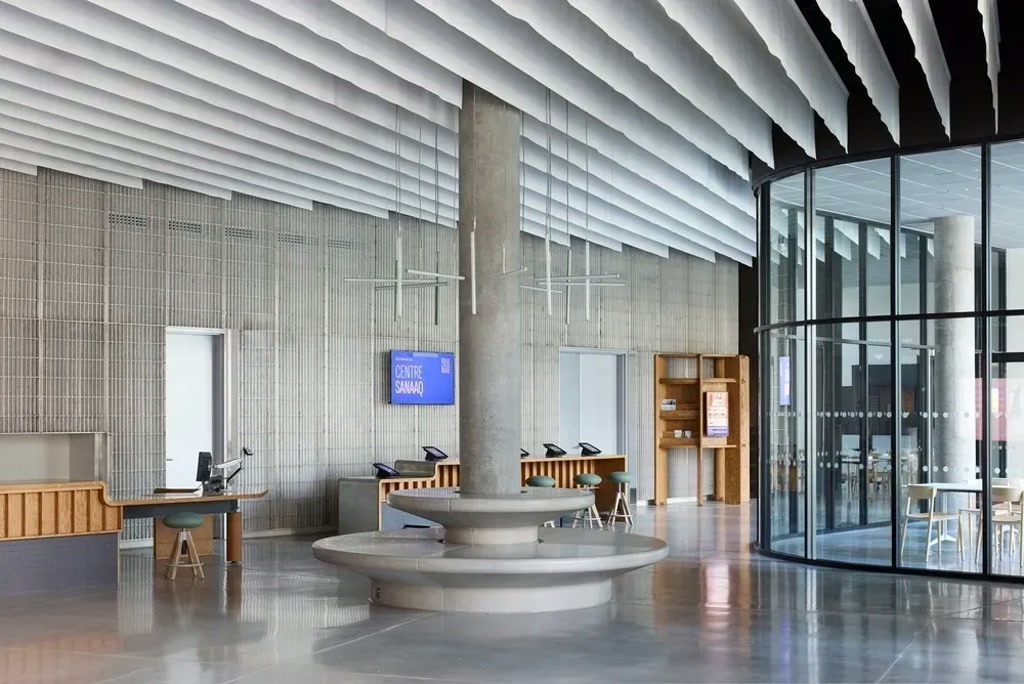
The project occupies the podium of a new residential development on the former site of the Montreal Children’s Hospital. Working within an inherited structural framework that is both expansive and complex, the design leverages the existing conditions to create a porous and legible interior landscape. Circulation is fluid and non-hierarchical, encouraging movement and visual continuity across spaces. Transparency and universal accessibility guide the spatial logic, reinforcing the Centre’s role as a civic resource rather than a closed institutional facility.
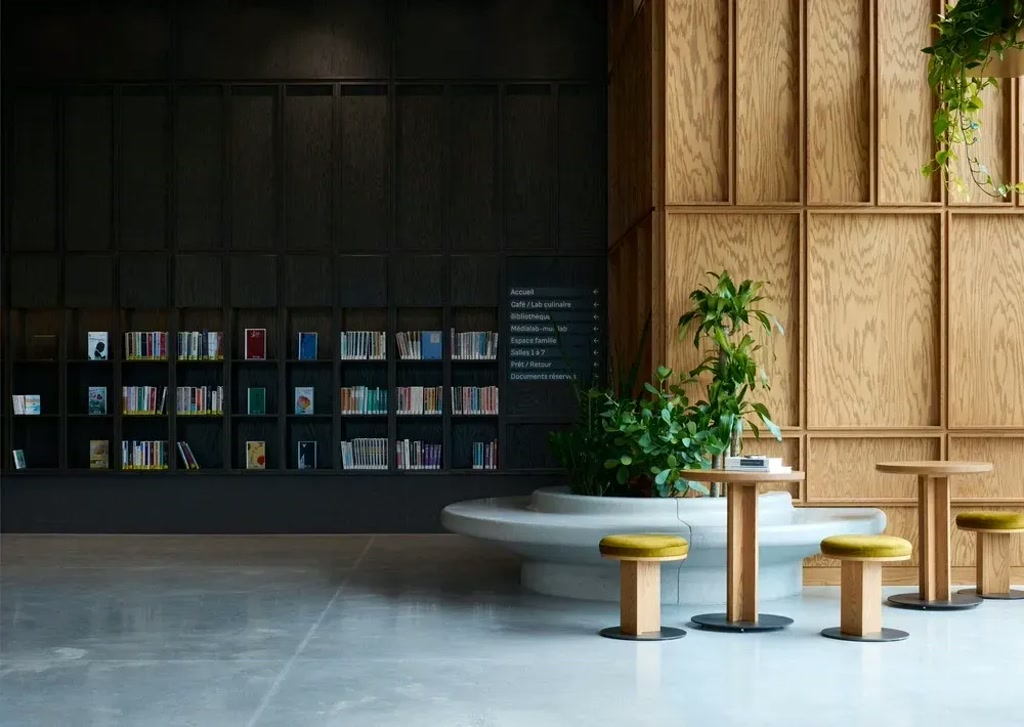
The name SANAAQ, derived from the Inuktitut word sana — to create, to work, to shape — anchors the project’s conceptual approach. The Centre functions as a platform for collective making, where culture is actively produced through community-driven programming. Its architectural language supports this ambition by remaining intentionally open-ended, balancing formal clarity with spatial flexibility. High-tech and low-tech elements coexist, as do informal gathering spaces and more structured programmatic zones, allowing users to appropriate and redefine the environment through use.
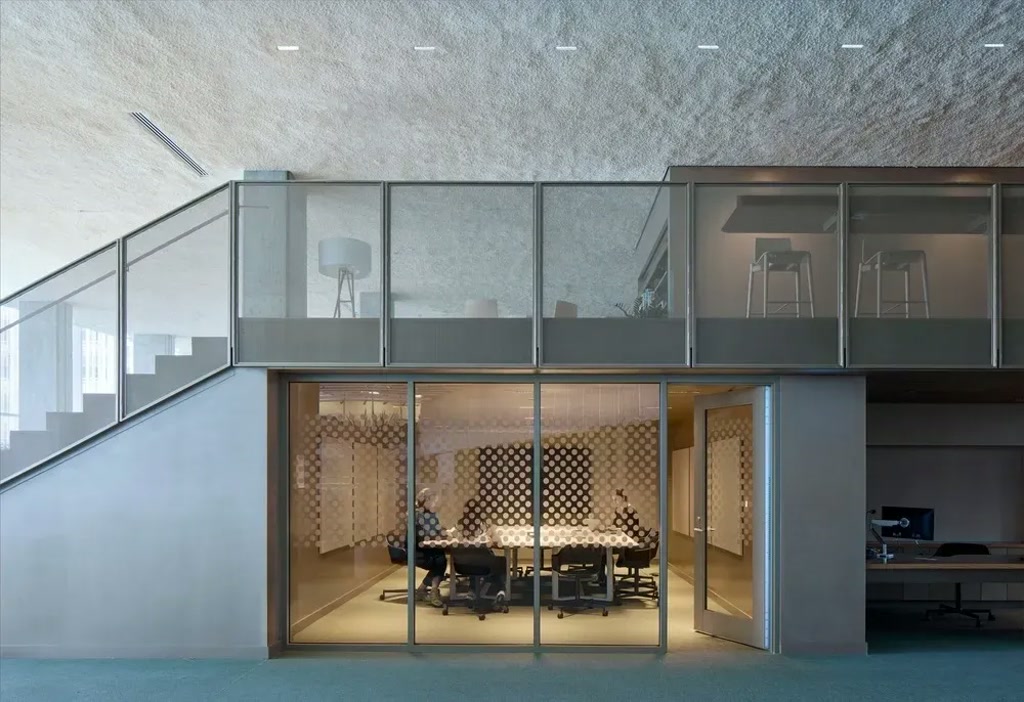
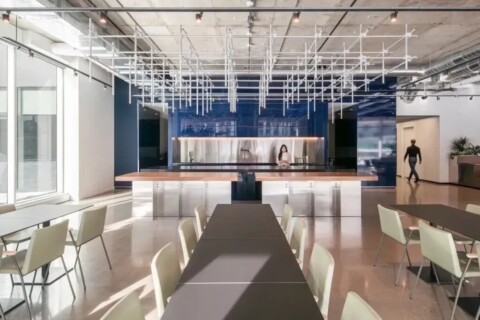
Internally, the spatial organization unfolds as an archipelago of interconnected “islands,” each calibrated for a specific atmosphere and function. The ground floor is anchored by a central agora, around which a café, performance hall, multi-purpose room, and express library are arranged. This animated sequence fosters informal encounters and public engagement. A broad, naturally lit staircase connects to the upper level, where the main library spaces wrap around a central mezzanine. Adult and youth collections, reading and study areas, multi-purpose rooms, and a children’s play zone establish a rhythm between openness and retreat.
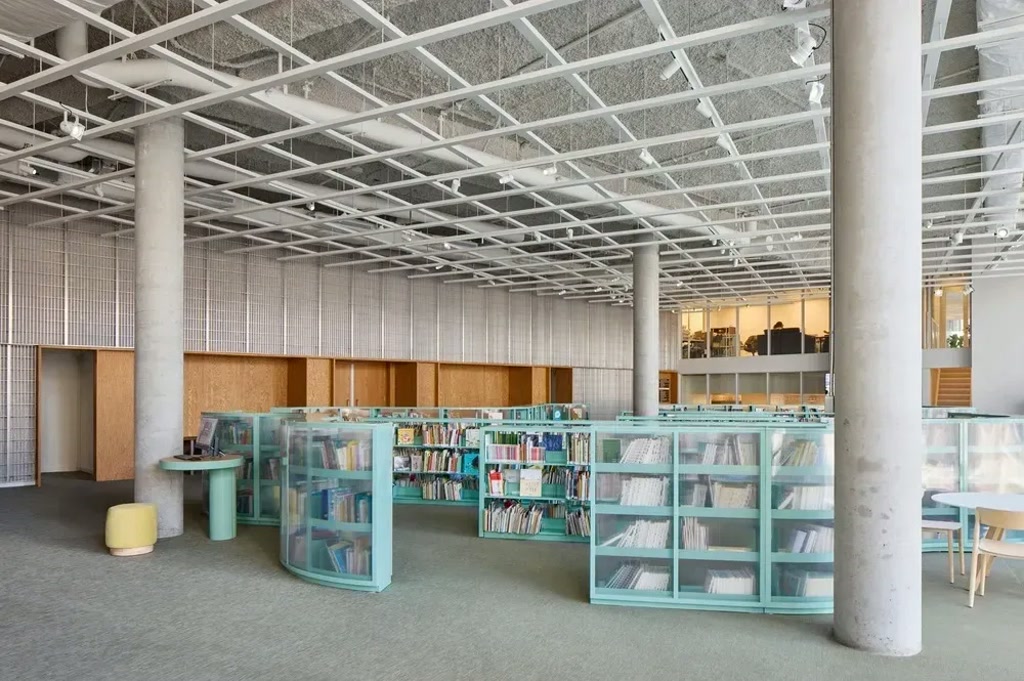
Materiality is approached through the lens of collage, allowing diverse textures and finishes to coexist without hierarchy. Aluminium grating, glass, wood panelling, polished concrete, sprayed cellulose, and textiles form a layered palette that reflects the Centre’s multiplicity of uses and voices. This material strategy supports both durability and acoustic performance while reinforcing the project’s inclusive and non-monolithic identity.
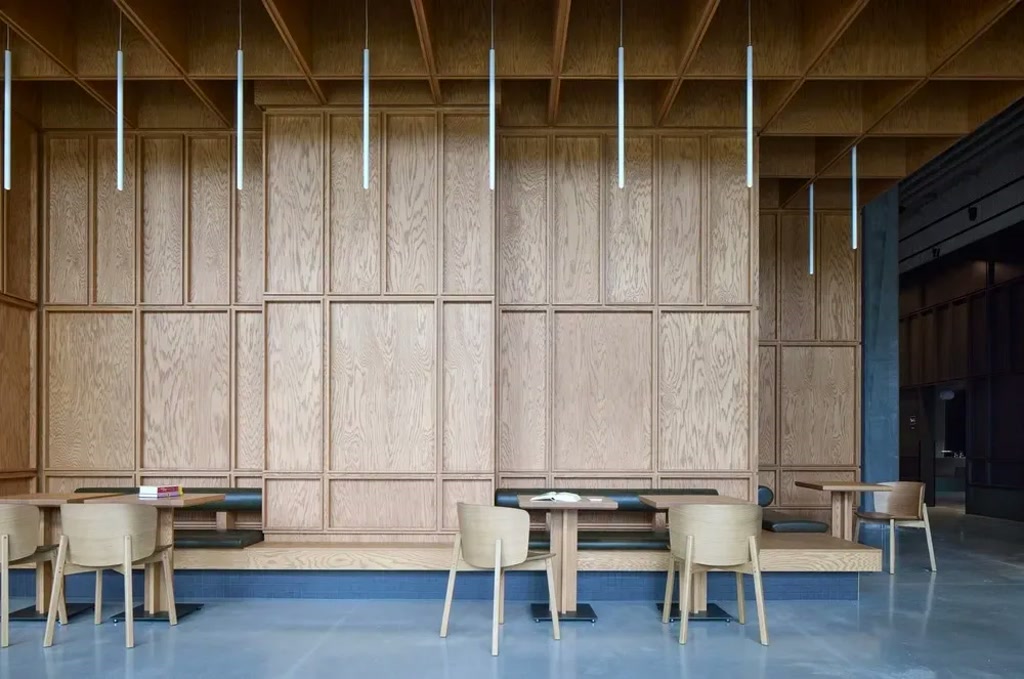
Acoustic control is a critical component of the design, addressed through coffered wood ceilings, suspended fabrics, and exposed sprayed cellulose. These elements enable the large, open volumes to accommodate a wide range of activities — from performances and gatherings to quiet reading — without compromising comfort. Integrated planting introduces moments of softness within the interior, contributing to a sense of well-being and spatial balance.
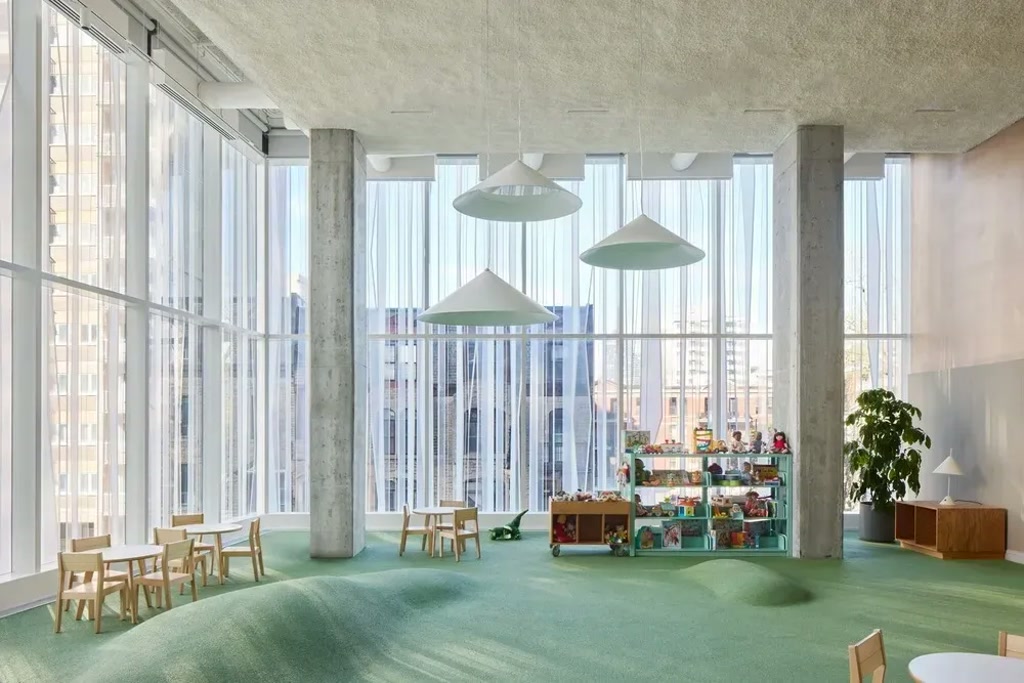
Ultimately, Centre SANAAQ operates as a framework rather than a finished form. By prioritising generosity, adaptability, and civic openness, the project proposes a contemporary model for cultural infrastructure — one that is permeable, evolving, and closely aligned with the social life it supports.
Photo Courtesy: James Brittain
Connect Online @ www.pelletierdefontenay.com/Home-EN | www.architecture49.com/en/ | www.zebulonperron.com/en/projects