

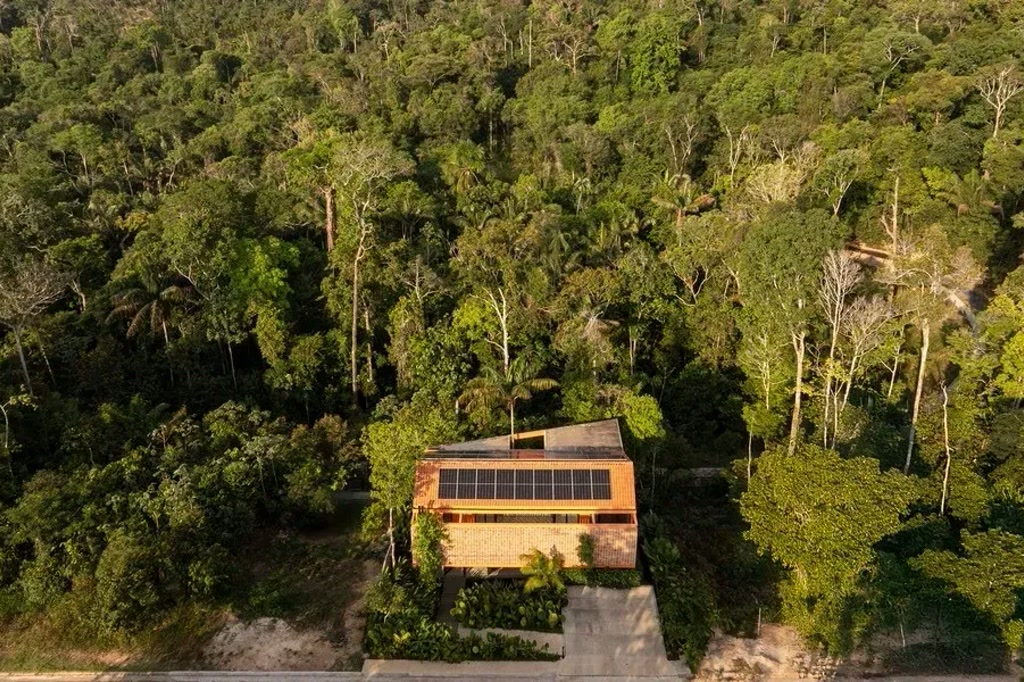
A tropical landscape strategy in Manaus that integrates native planting, microclimatic control, and long-term ecological stewardship.
Set at the highest point of a residential enclave in Manaus and directly abutting a permanent conservation zone, the landscape for Pupunha House is conceived as a calibrated extension of the Amazon rainforest. Designed by Hana Eto Gall Landscape, the project positions the garden not as an accessory, but as the primary spatial and environmental framework through which the residence is experienced.
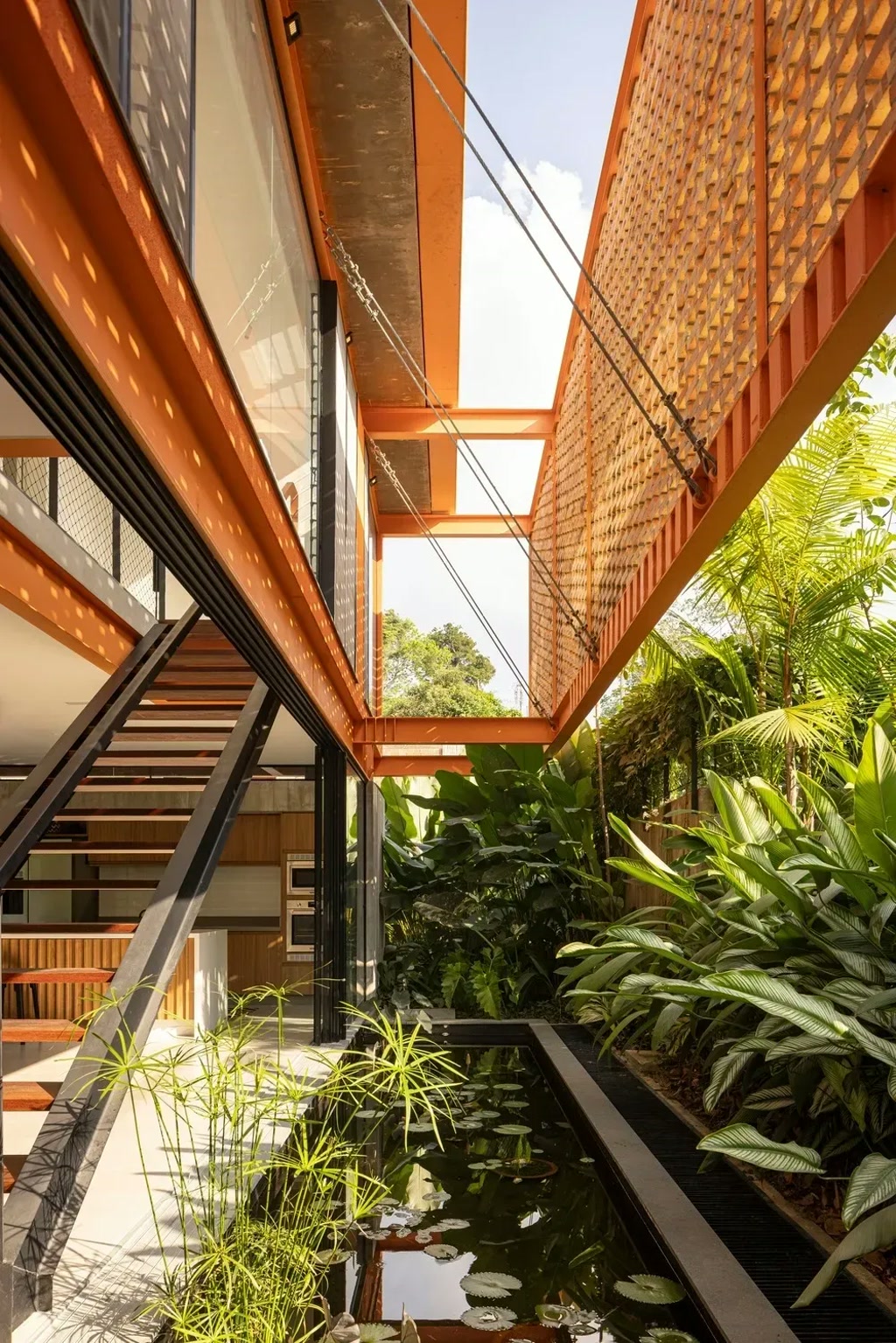
Rather than establishing a clear boundary between architecture and site, the landscape strategy deliberately softens this threshold. The garden mediates between built form and forest, allowing the house to settle into its context with restraint and continuity. The architectural envelope, designed separately, is supported by a landscape logic that privileges permeability, shade, and long-term ecological performance.
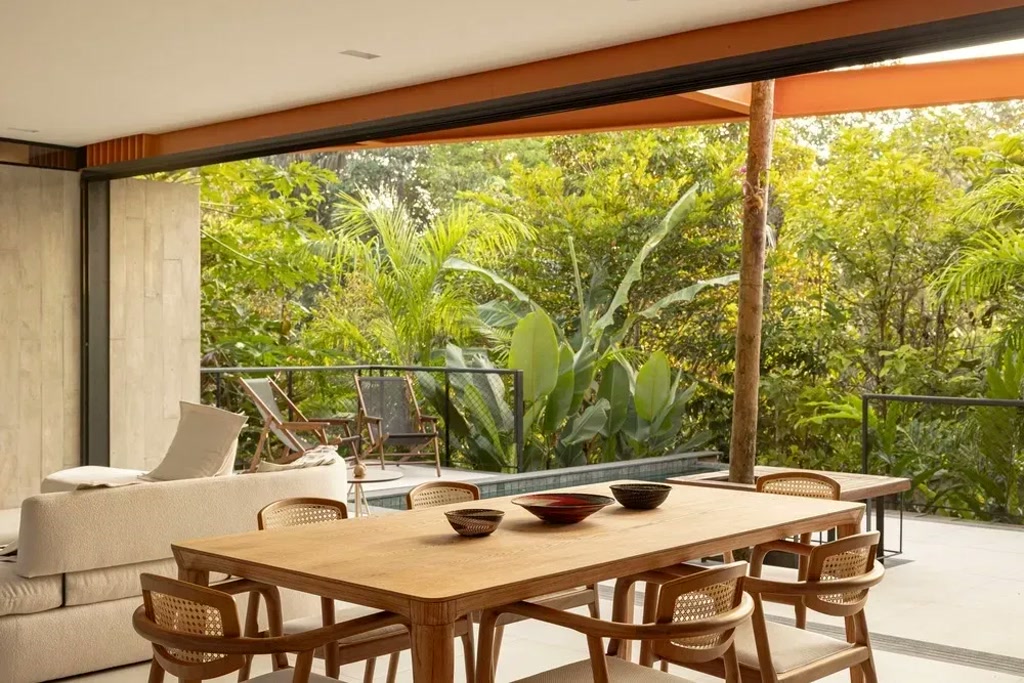
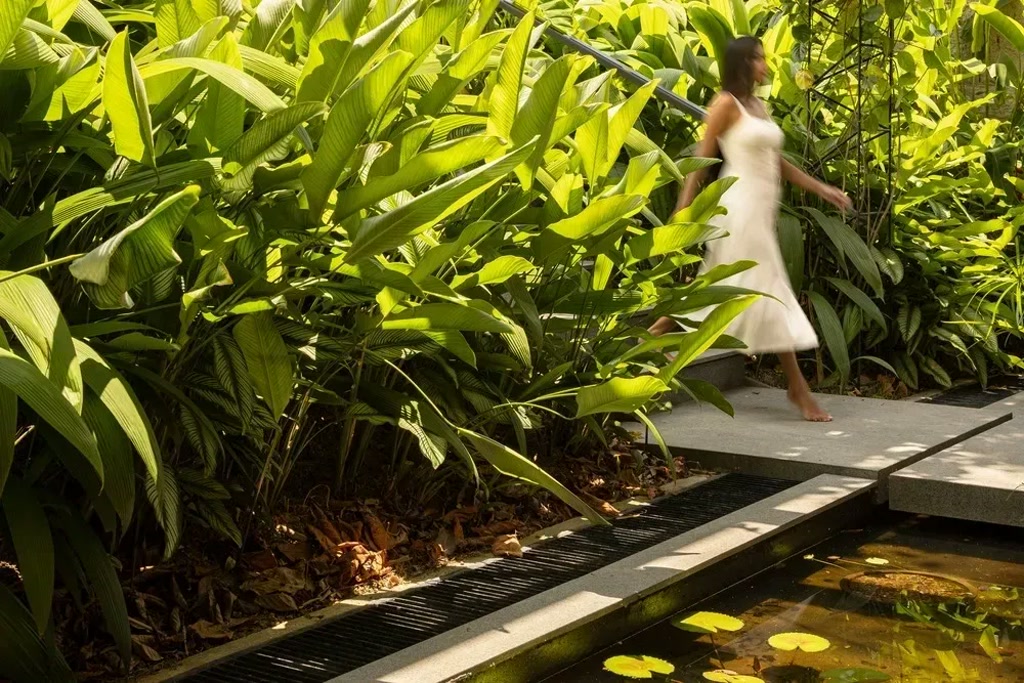
Arrival is orchestrated as a gradual immersion. A sequence of paths moves through dense tropical planting, where layered foliage, filtered light, and natural humidity establish a distinct microclimate. Large-leaf species and overhead canopy planting temper heat gain and create visual enclosure, shifting the experience from exposed site to sheltered interior. This logic extends inward, with planting integrated along circulation routes to maintain a continuous relationship between indoor and outdoor environments.
The landscape design responds directly to the site’s terrain and environmental conditions. Automated irrigation systems are calibrated to support plant health while minimising water waste, and grading strategies respect existing topography to reduce soil disturbance. The house reads as lightly positioned within the landscape — appearing to hover above the forest canopy rather than displace it.
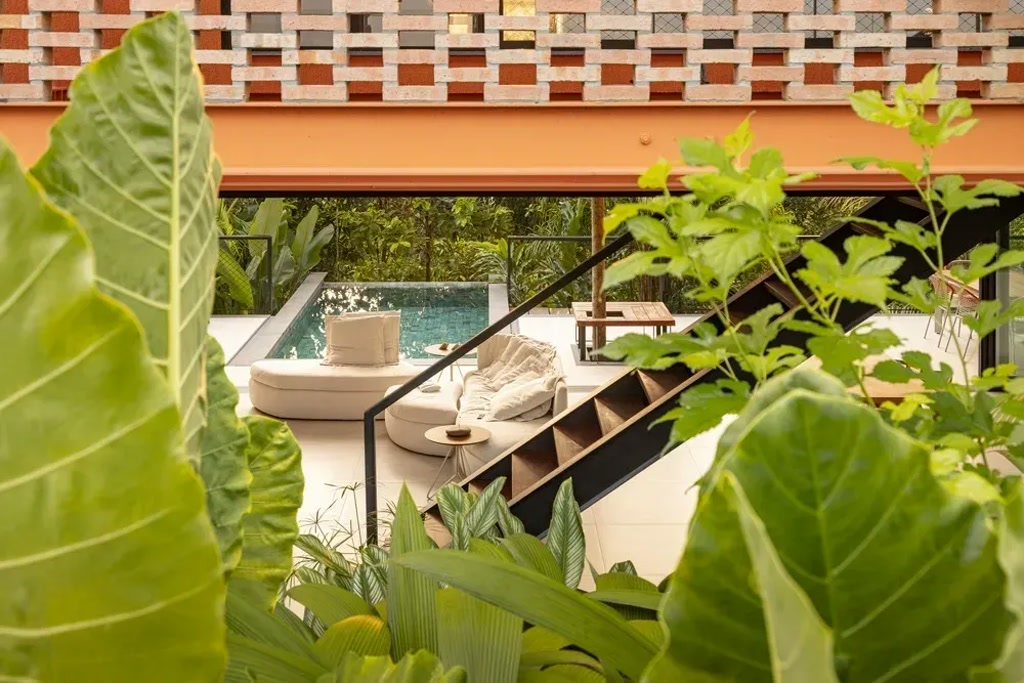
Plant selection prioritises native and climate-resilient species suited to Manaus’ equatorial conditions. Calatheas, Alocasias, Heliconias, banana trees, and palms establish a layered composition that balances ecological function with visual density. Existing vegetation was selectively retained, while new planting was introduced to enhance biodiversity, improve thermal comfort, and reinforce privacy without reliance on hard boundaries.
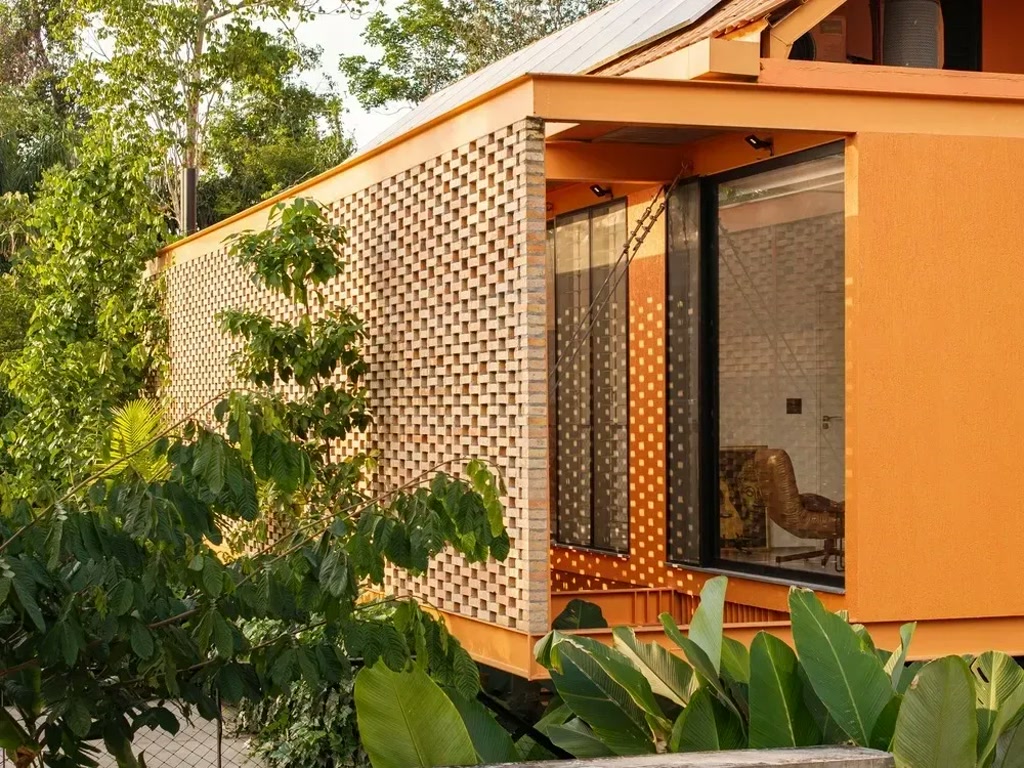
Throughout the project, the landscape operates as an environmental system rather than a decorative layer. Shade, evapotranspiration, and controlled views are carefully aligned to support daily use while preserving the site’s ecological character. The result is a residential garden that functions as both habitat and living space — integrating architecture with forest through measured intervention and sustained ecological sensitivity.
Photo Courtesy: Joana França
Connect Online @ www.instagram.com/arq.hanaetogall/