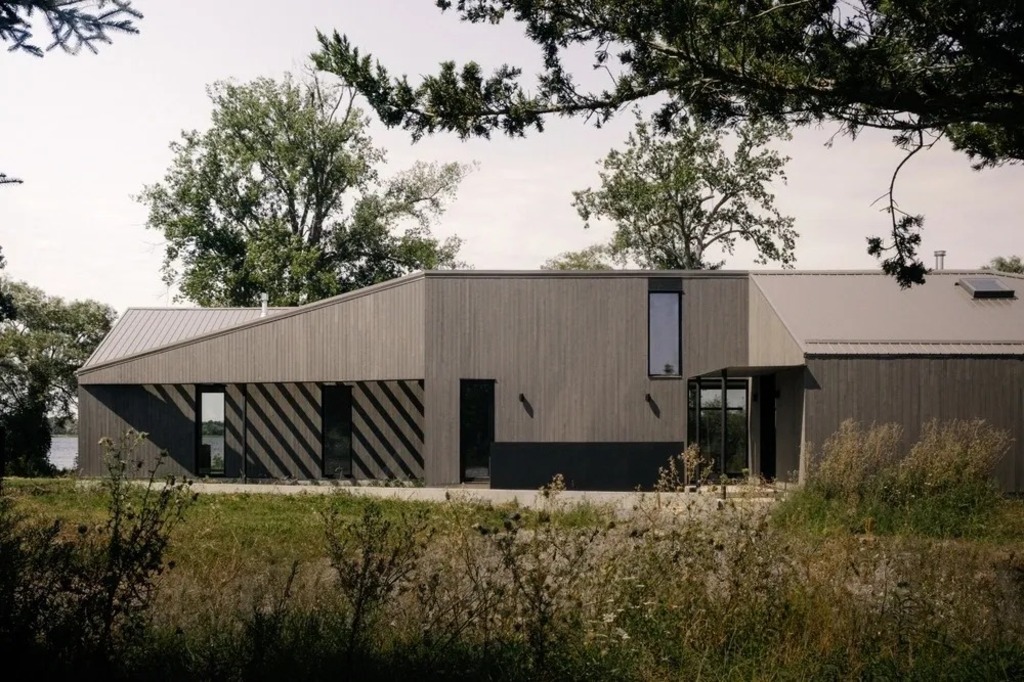
From intersecting “living bars” to expansive glass façades, the design crafts evolving perspectives across seasons.
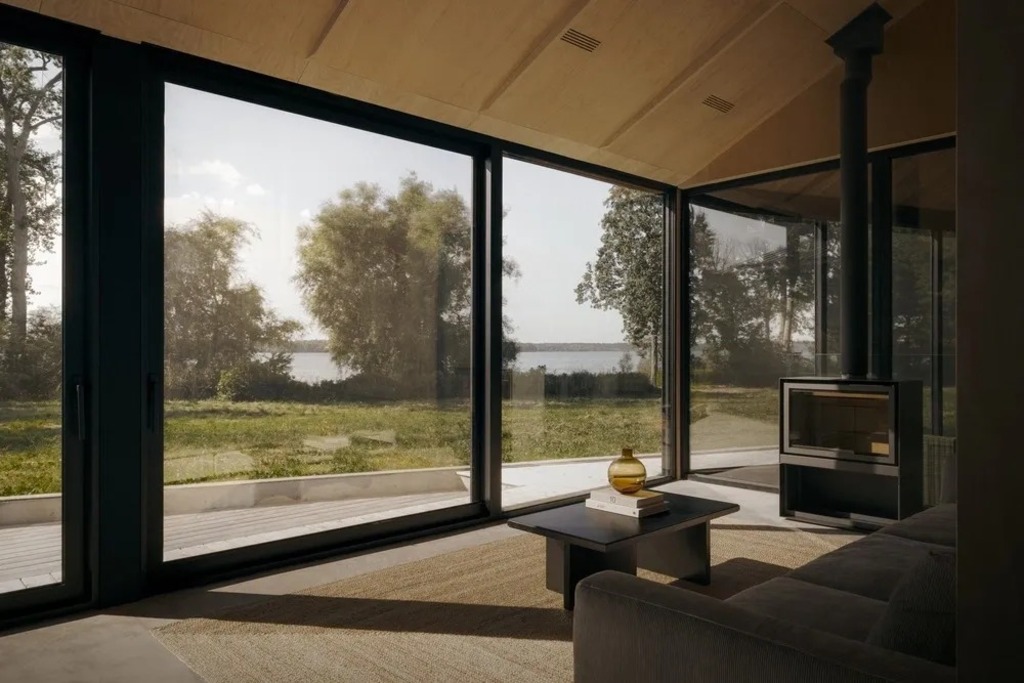
Set in the quiet countryside of Ontario, a few hours east of Toronto, South Bay Residence rests on a broad, north-facing field where a delicate grove of trees gives way to a shoreline of varied species. This setting – at once open and intimate – became the foundation of the home’s architectural concept, where nature is not a backdrop but an active participant in daily life.
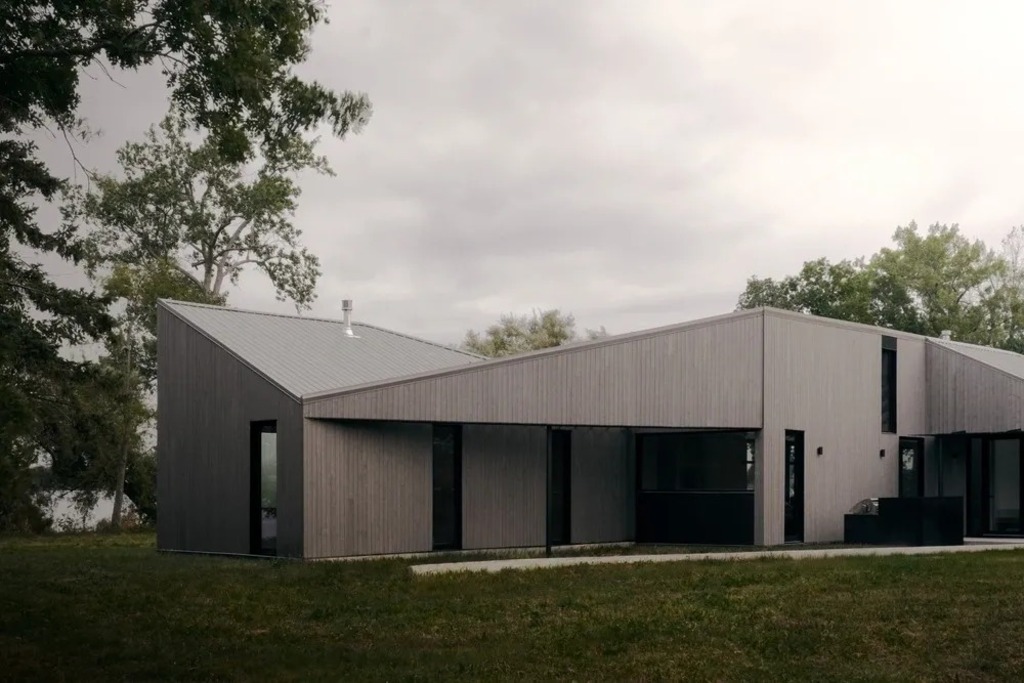
Instead of a single linear building, the residence unfolds as three intersecting “living bars” that shift across the site. This arrangement breaks the landscape into a series of outdoor rooms and microclimates, each offering wind protection, seasonal comfort, and framed views. Moving through the house, one experiences changing perspectives – sometimes expansive, sometimes focused – a deliberate play that reshapes the relationship between home and horizon.
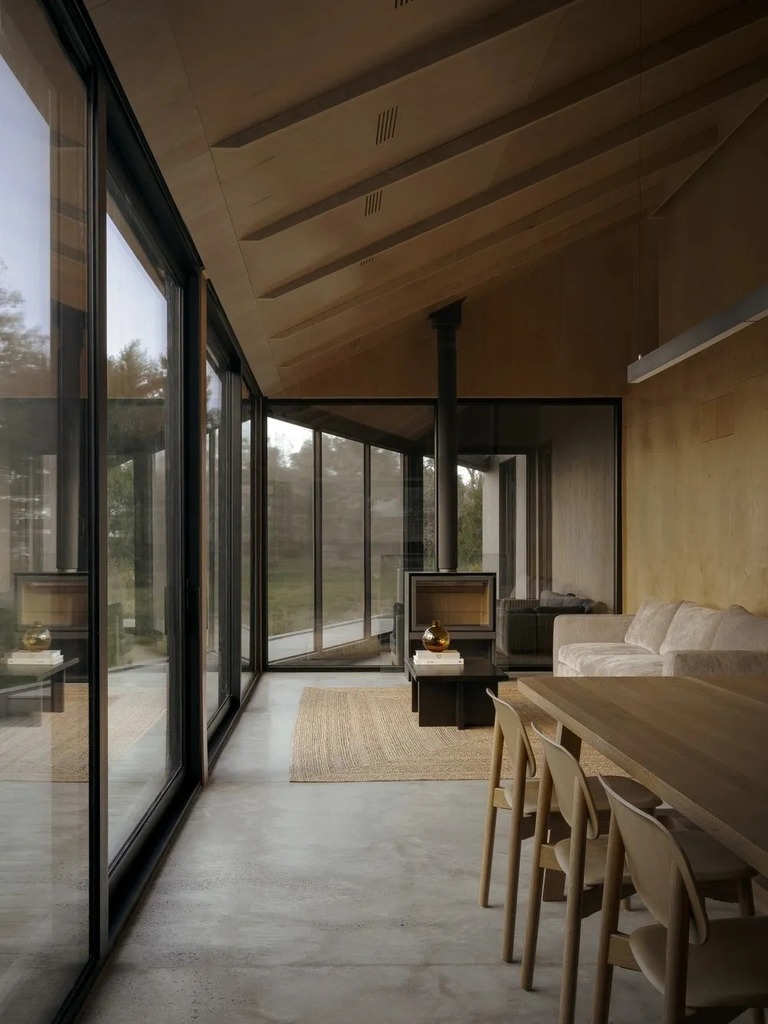
The design rethinks the orientation of living spaces through what the architects describe as “landscape” versus “portrait” layouts. Departing from the familiar repetition of long rectangular grids, the main living area rotates the geometry: a 48’ x 12’ space where the shorter side connects across rooms. This subtle shift expands the façade toward the view, dissolving boundaries between indoors and outdoors. At the dining table or sofa, floor-to-ceiling windows erase peripheral obstructions, drawing the eye entirely to the surrounding field and shoreline.
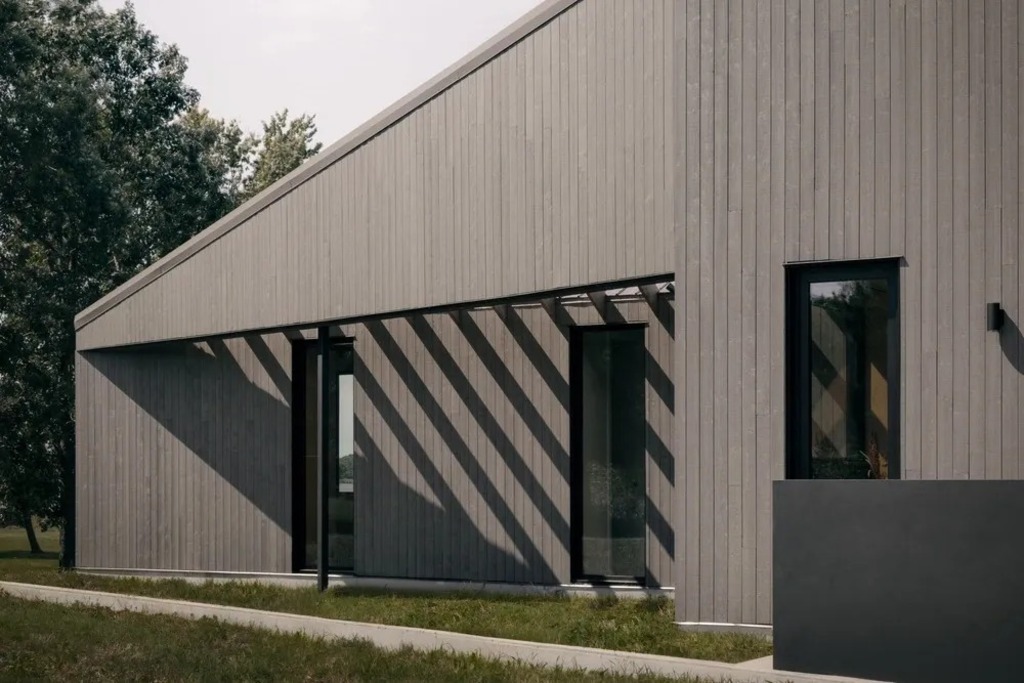
Above, the roofscape introduces both shelter and drama. Three mirrored shed forms intersect at the main living bar, creating protected outdoor areas under a continuous canopy. The geometry provides solar shading and weather protection while adding sculptural energy to the flat site. Seen from a distance, the roofline evokes rolling hills or jagged mountains, an expressive reinterpretation of rural vernacular forms that enriches both the interior volumes and the exterior silhouette.
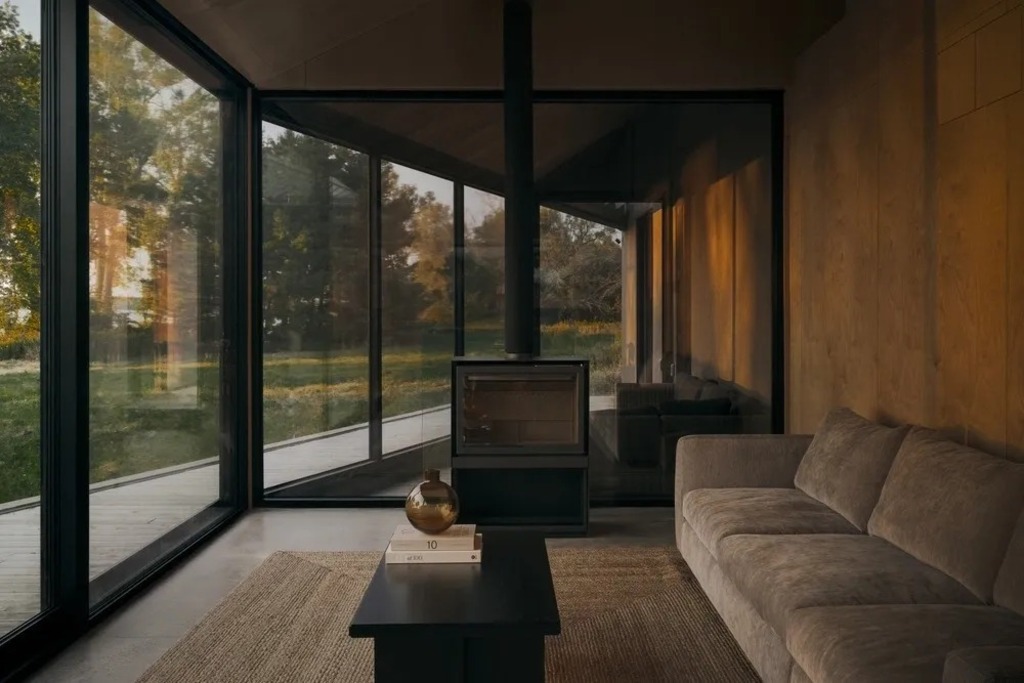
Inside, the material palette is intentionally restrained. Warm plywood clads most surfaces, creating a calm and unified backdrop, while crisp white walls below the roof datum highlight artwork. In contrast, wet areas – including an indoor spa – are finished in tactile tile, offering a visual and sensory counterpoint.
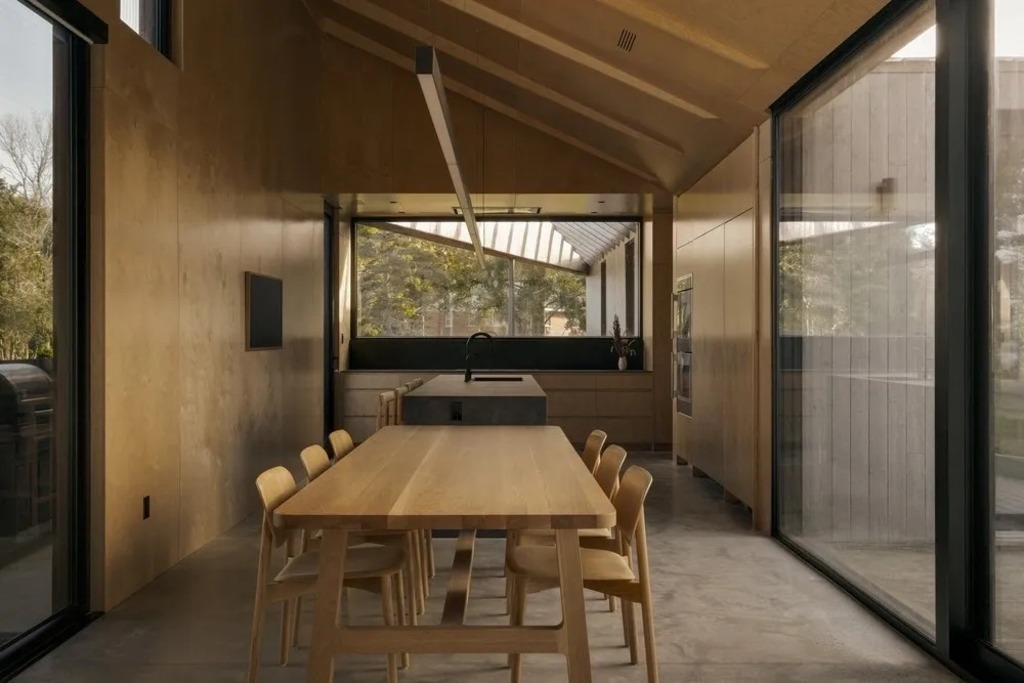
Though its forms appear complex, the house is grounded in familiar proportions and archetypal rural geometries. Its distinctiveness emerges from the way these elements are layered, rotated, and reinterpreted against the openness of the site. The result is a residence that frames the landscape as much as it inhabits it – a place where architecture and nature continually shape one another, offering an evolving narrative of space, light, and season.
Photo Courtesy: Felix Michaud
Connect Online@www.archcollab.com